Planning a Memorial or Plaque: From the First Idea to Installation
Before choosing a shape, establish who is being remembered, where the work will stand and who approves the design. This order helps avoid later changes.
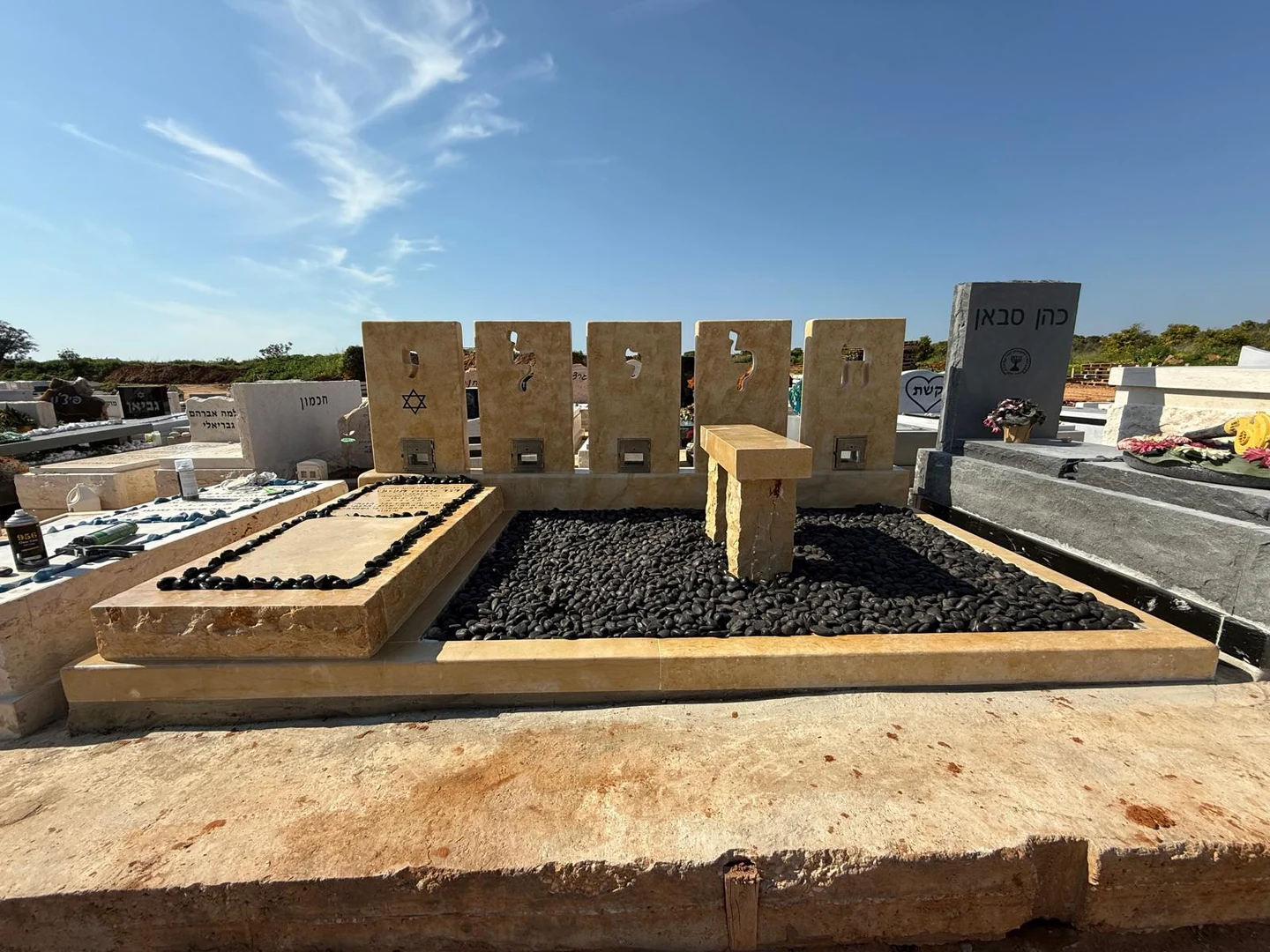 Image awaiting review
Define the Purpose of the Memorial
A memorial may honour a person, group, event or community history. Before choosing a stone shape, write a short brief: whom it commemorates, who will visit and which details should remain clear over time.
A family, public institution and donor group may need different approval processes. Appoint a project coordinator and identify who approves wording, design and budget. Without one point of coordination, small changes can lead to conflicting versions.
Gather names, dates, symbols and photographs for planning, but do not feel obliged to include everything in the finished memorial. One clear detail and readable wording can communicate more than a crowded composition.
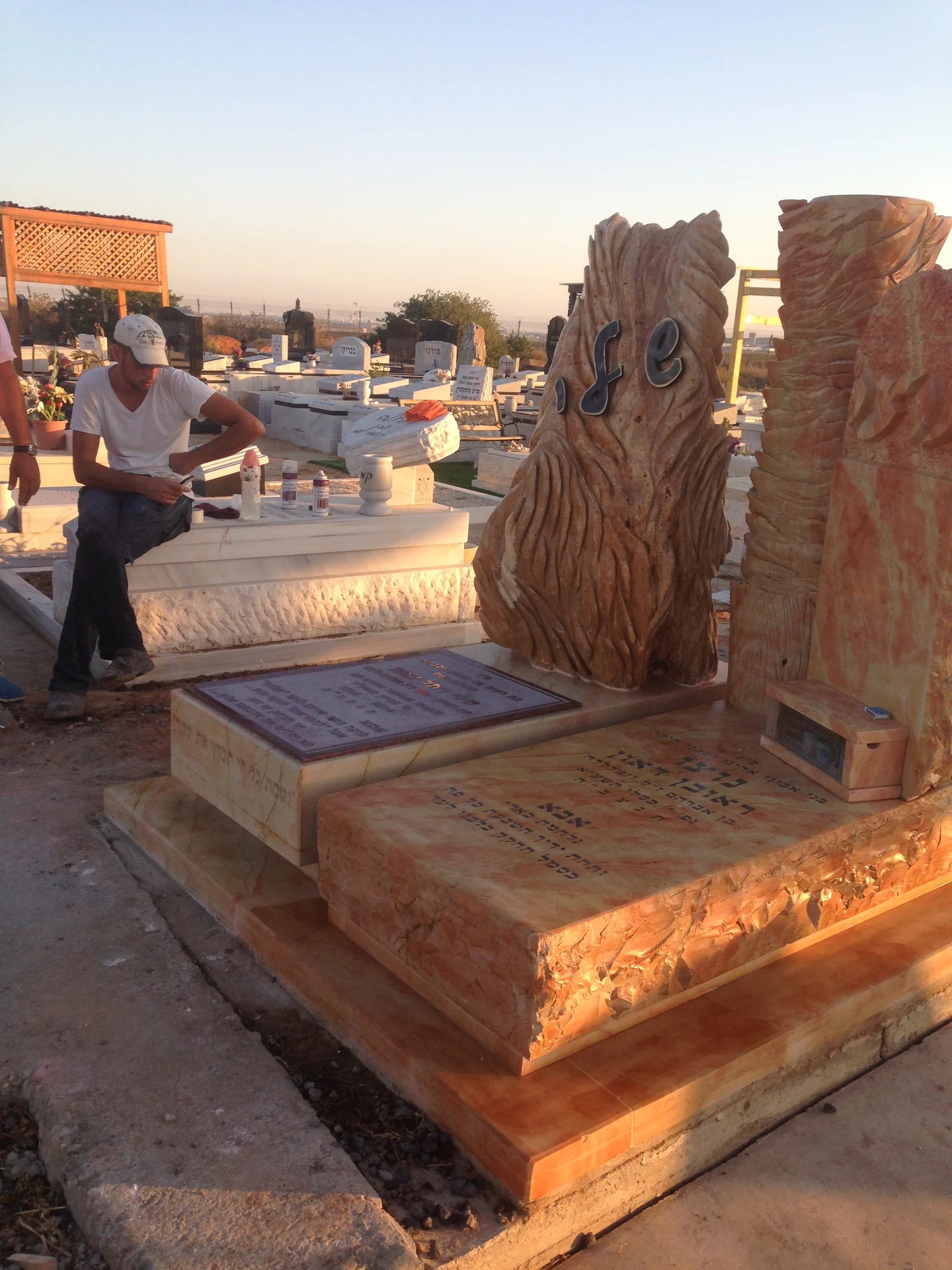 Image awaiting review
The Setting Is Part of the Design
A lobby wall plaque, garden boulder and outdoor monument have different requirements. Document the site, visitors' viewpoints, access and available space. Establish ownership and installation approval before detailed design.
Consider whether visitors read close up, from a path or during a ceremony. Greater reading distances need appropriate lettering size and text length. Include people with visual or mobility difficulties in the brief and seek accessibility advice where needed.
Choosing Material and Proportions
Rubi designs memorials using natural boulders, worked stone, metal details and other materials. Choose them for the site, shape, inscription and intended maintenance, not solely from a photograph of another project.
Outdoor projects also need assessment of exposure and the connections between materials. Foundations, structural details and anchors require professional planning appropriate to the project. A design sketch cannot replace engineering where it is needed.
For a wall plaque, the wall and suitable fixing method matter as much as colour. Verify dimensions on site, select appropriate thickness and construction, and coordinate installation with the building's responsible representative.
Wording, Names and Future Additions
For multiple names, keep a structured list of details. Check spelling, order, languages and punctuation, then approve one production version. Decide whether all names receive equal prominence and what determines their sequence.
If names or details may be added later, plan the space or separate components now. This is easier than discovering that the existing lettering occupies the entire surface.
Check that you may use any third-party symbol, photograph or text. Clear source files and a formally approved inscription help ensure accurate production.
Budget, Approvals and Handover
The budget should cover design, fabrication, lettering, delivery, installation and any associated site works. Assign responsibility for each stage, particularly when landscapers, architects, engineers or institutional staff are involved.
- Measure and document the intended location.
- Obtain the site owner’s and relevant authorities’ approval for the project.
- Approve design, materials and wording before production.
- Coordinate infrastructure, access, transport and installation.
- A final inspection and handover of care instructions.
Allow time to inspect the installed work before a ceremony. Rubi coordinates stone design and production at the Petah Tikva workshop and supports installation according to the project scope. Begin with the site, purpose and budget, then develop a proposal you can review and approve.
Have a question about your headstone?
Ask Rubi about stone, inscriptions and options, free and without obligation.
Related information
Natural-Stone Headstones: Choosing the Boulder, Texture and Inscription
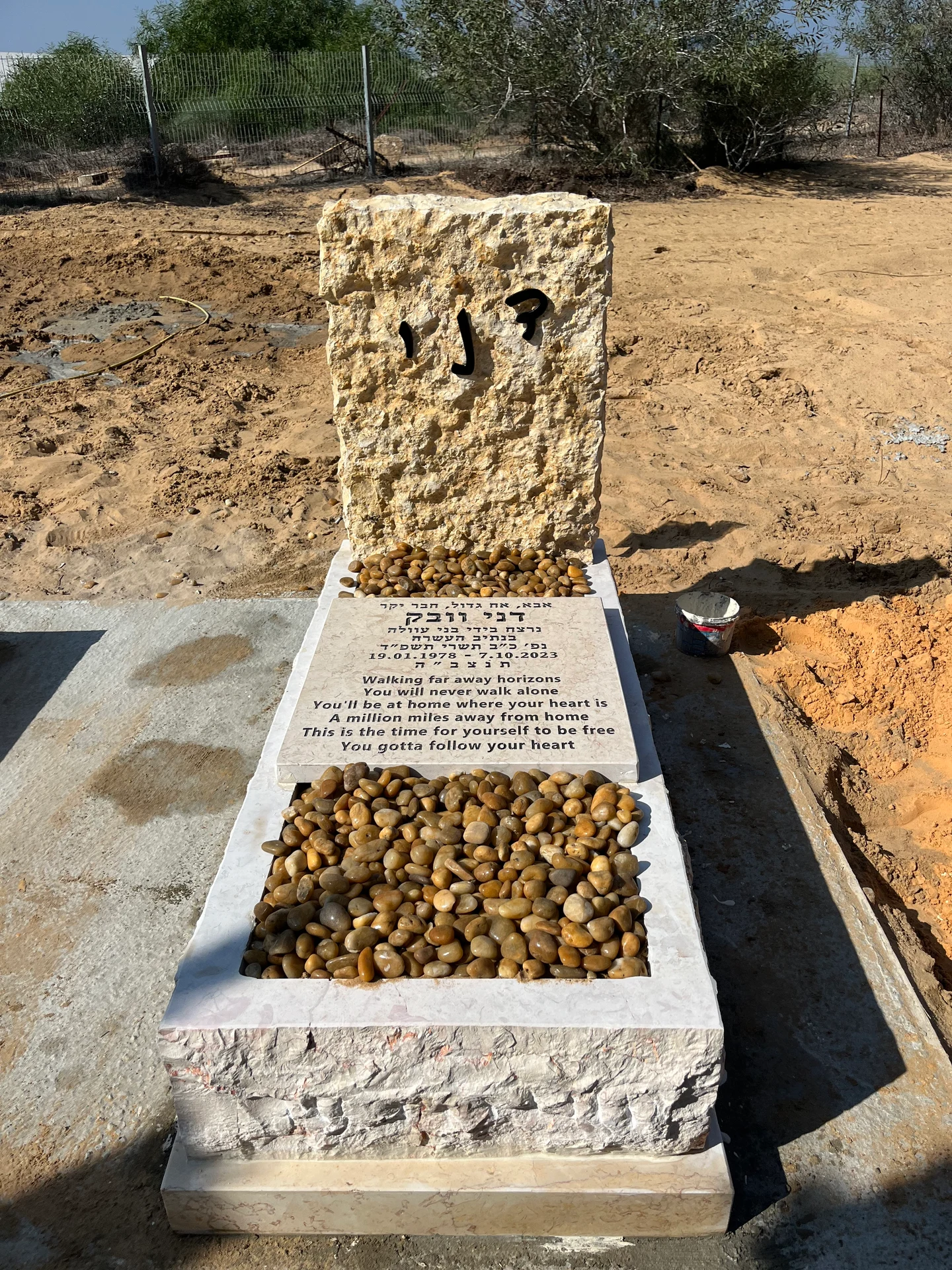
Natural-stone headstones: rough and worked stone, choosing a specific block, inscription space, finishes and care, with examples.
Read the guide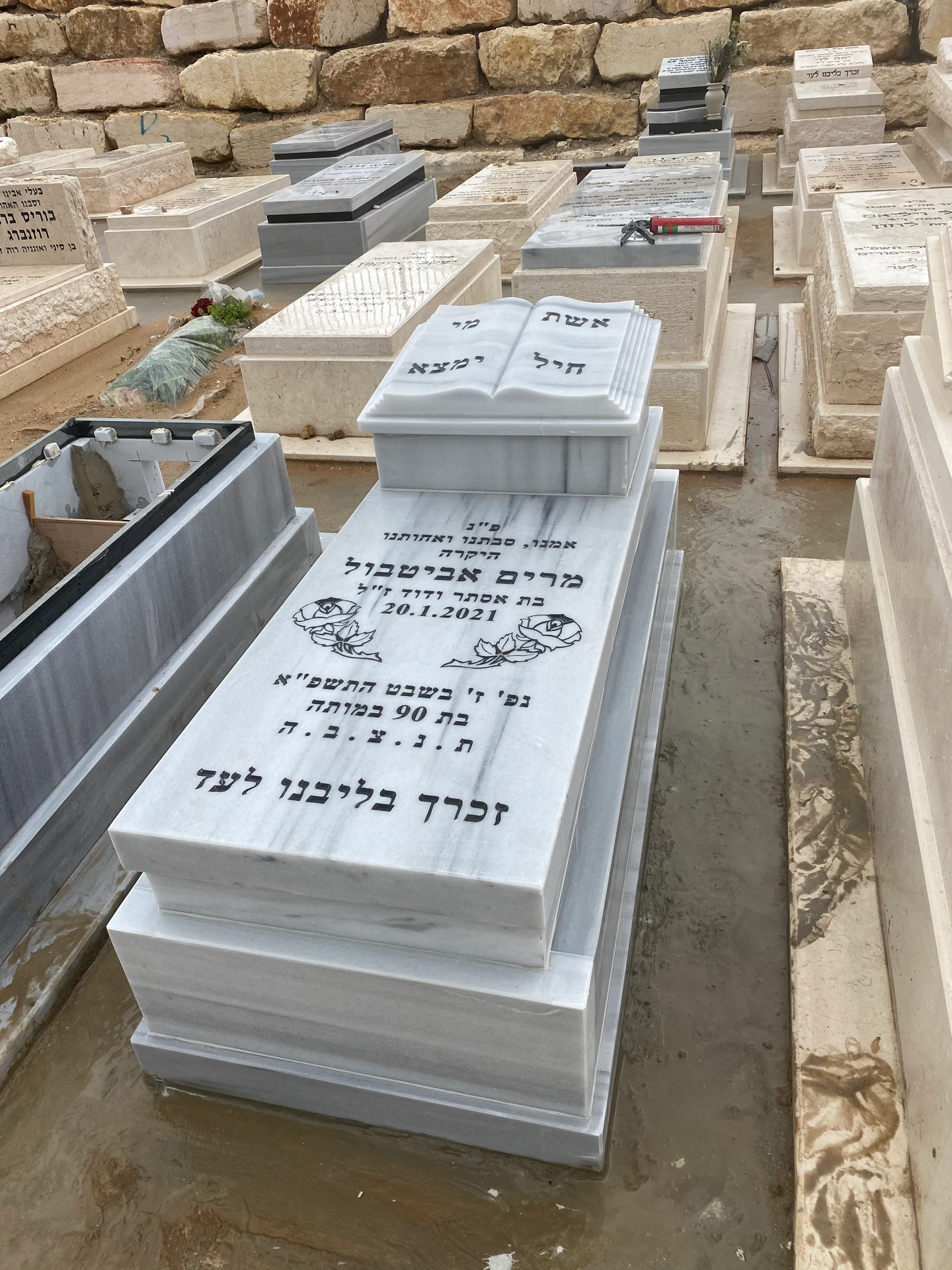
Headstone Inscriptions: Choosing and Approving the Words
What should a headstone say? Wording, names, dates, engraving and line layout, with examples for mothers, fathers and personal tributes.
Read the guide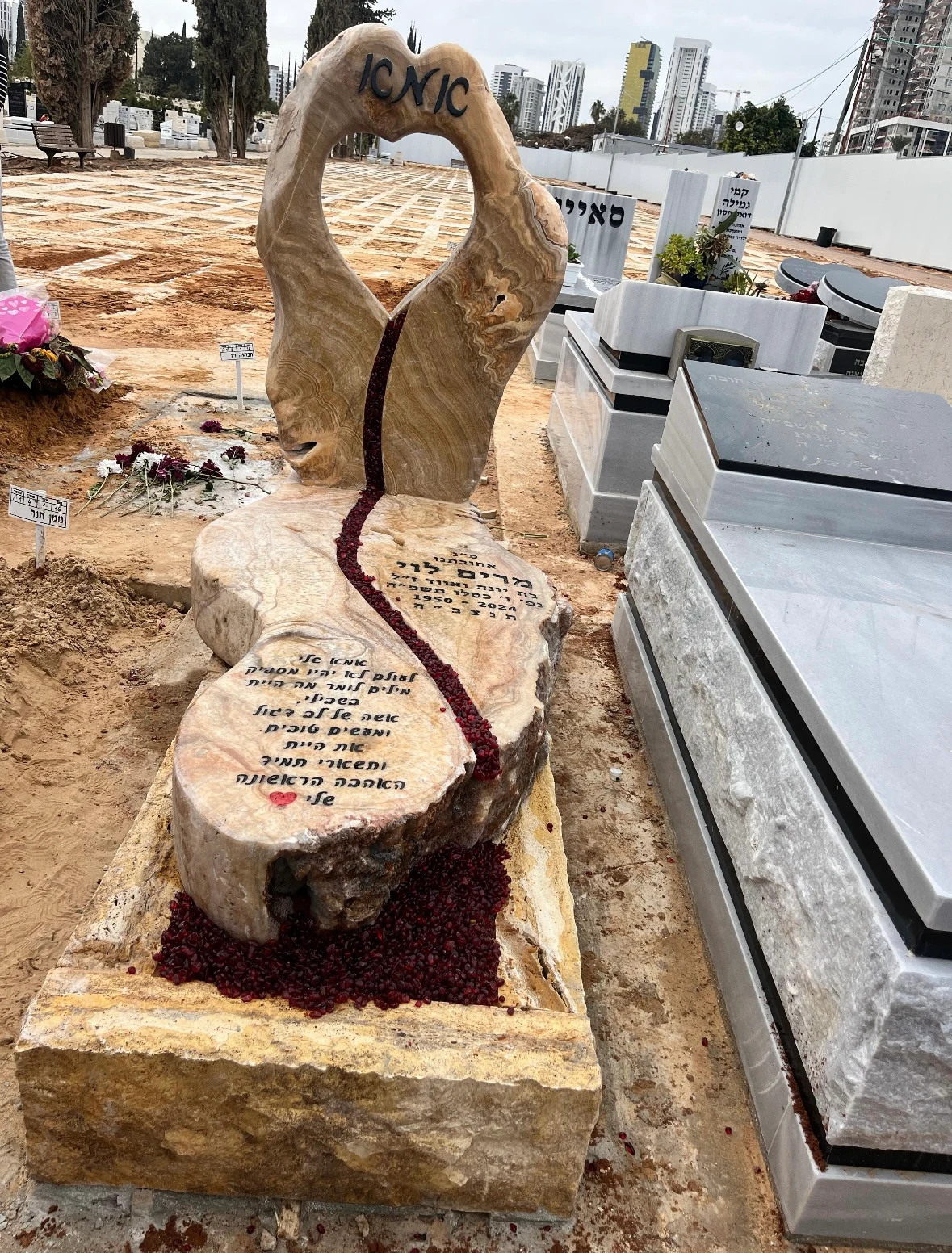
Bespoke Headstones: From a Personal Idea to a Work in Stone
Bespoke headstone design with examples from Rubi: develop an idea, combine sculpture and materials, preserve legibility and work within your budget.
Read the guide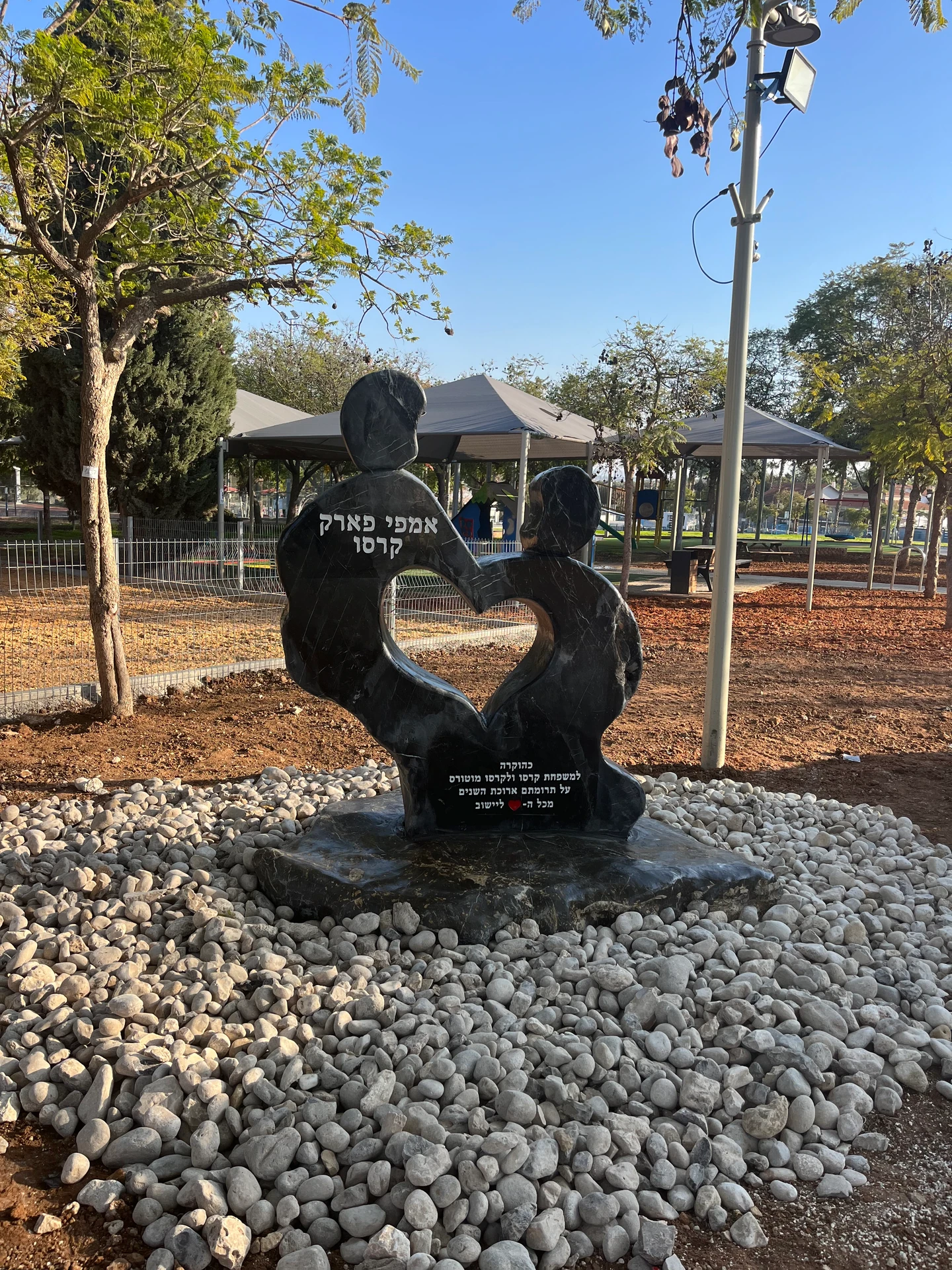
Creating a Memorial Garden or Square: A Guide for Families, Communities and Organisations
A detailed guide to creating a remembrance space or memorial square: site selection, local coordination, stone design, accessibility, wording, budget and care, with photos and a printable planning sheet.
Read the guide