Inscriptions for a Father: Personal Words and Examples
Sometimes, after trying to say so much, one phrase remains that feels like Dad. Start with a clear memory of him, rather than a list of qualities that could describe anyone.
Before Writing: What Do You Want the Words to Convey?
A father who called every evening, fixed everything at home or listened without rushing to answer: such memories can guide the wording. You need not describe the memory itself. It might inspire a short line such as “You were always there for us.”
Ask each relative for one sentence, then look for a shared theme rather than joining every contribution into a long text. A common family line can remain on the stone, with individual stories kept for a eulogy or album.
Three Approaches to an Inscription for a Father
Short and personal
Our beloved father, [full name]
The home you built for us still holds your love and spirit
[Approved birth and death details]
Presence and listening
[Full name]
Dad, you were always there for us
Your memory is with your family every day
A way of life
To our dear father, [full name]
You taught us generosity through your actions
We will carry your example with us
Original wording examples to adapt to the person and family. Replace bracketed details before engraving.
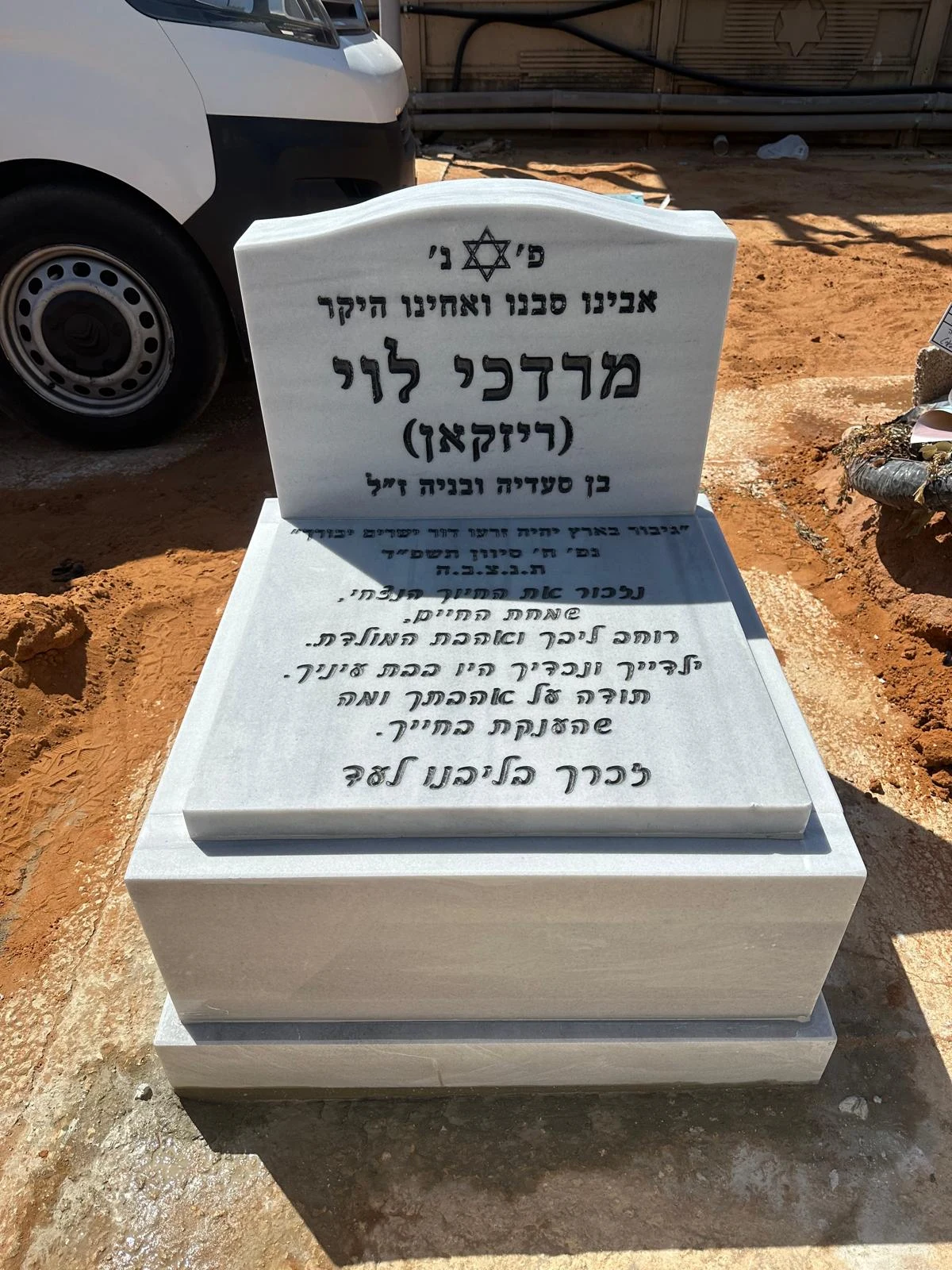
Remembering Him as a Husband, Grandfather and Brother
A long list of roles is not essential. “Beloved husband, father and grandfather” may fit, or simply “Loved by his family.” Check that the wording is accurate and does not emphasise a relationship the family would rather not include.
For a shared memorial, consider this inscription alongside the other person's space. The font and structure can match without making the two texts identical. The double memorial guide explains planning space for two names and future additions.
The Proof to Approve before Engraving
- The full name in the family’s chosen spelling; a nickname only if wanted.
- Parents’ names and traditional wording according to family custom, with guidance where needed.
- Check the death date and any Hebrew date against documents and qualified guidance, not memory alone.
- Line breaks, name size and space before the personal phrase.
- Approve one dated final version instead of scattered correction messages.
When the Family Has Not Yet Agreed on the Words
You can confirm the factual details first and continue the personal line until the agreed engraving deadline. A simple phrase everyone accepts is better than impressive wording that feels wrong to someone. Confirm how long changes remain possible.
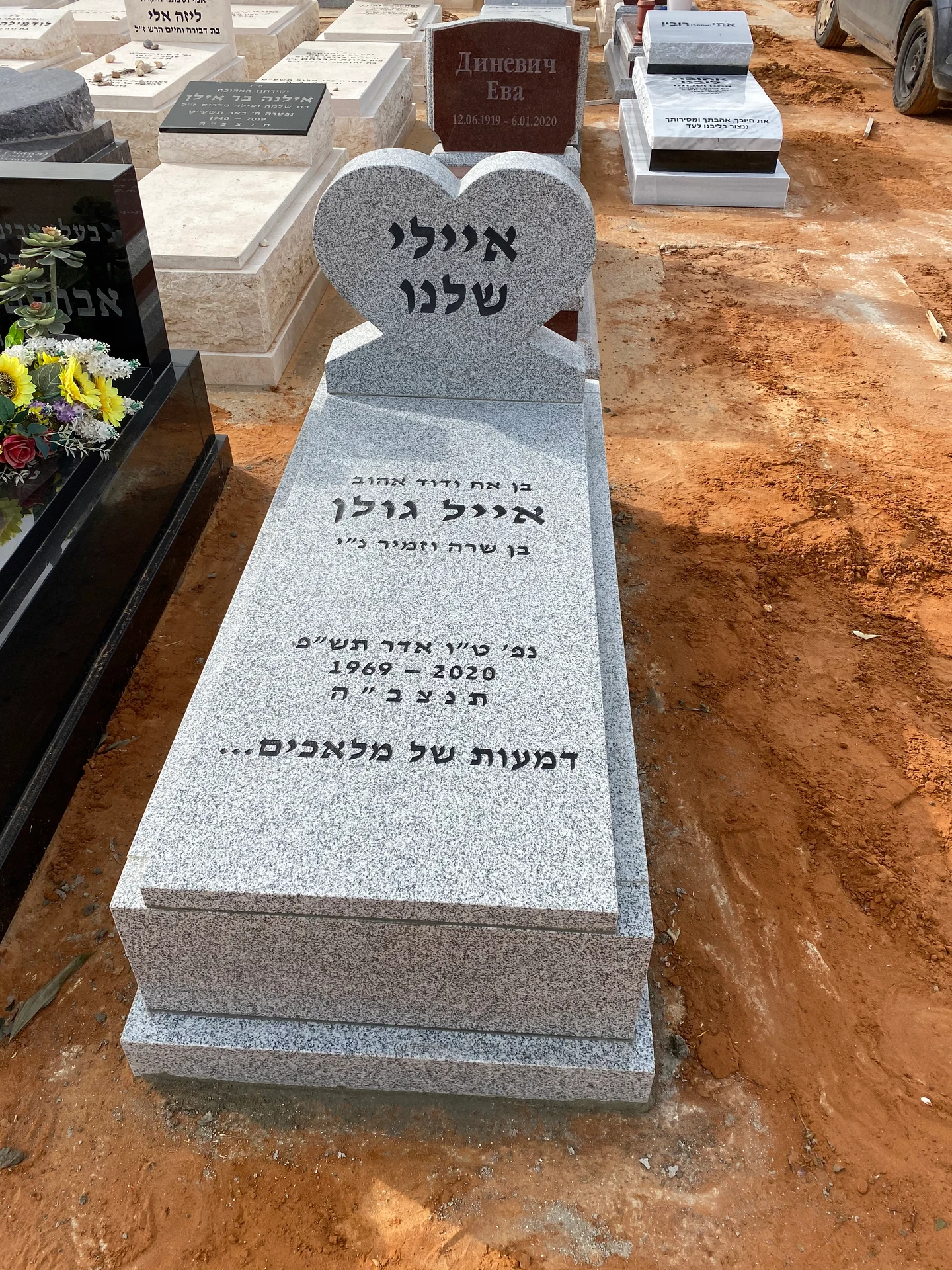
Rubi can check readability, suggest line breaks and explain options for lettering and engraving. The personal words remain yours. These examples were written to suggest directions; they are not quotations from the families whose memorials appear in the photographs.
Have a question about your headstone?
Ask Rubi about stone, inscriptions and options, free and without obligation.
Related information
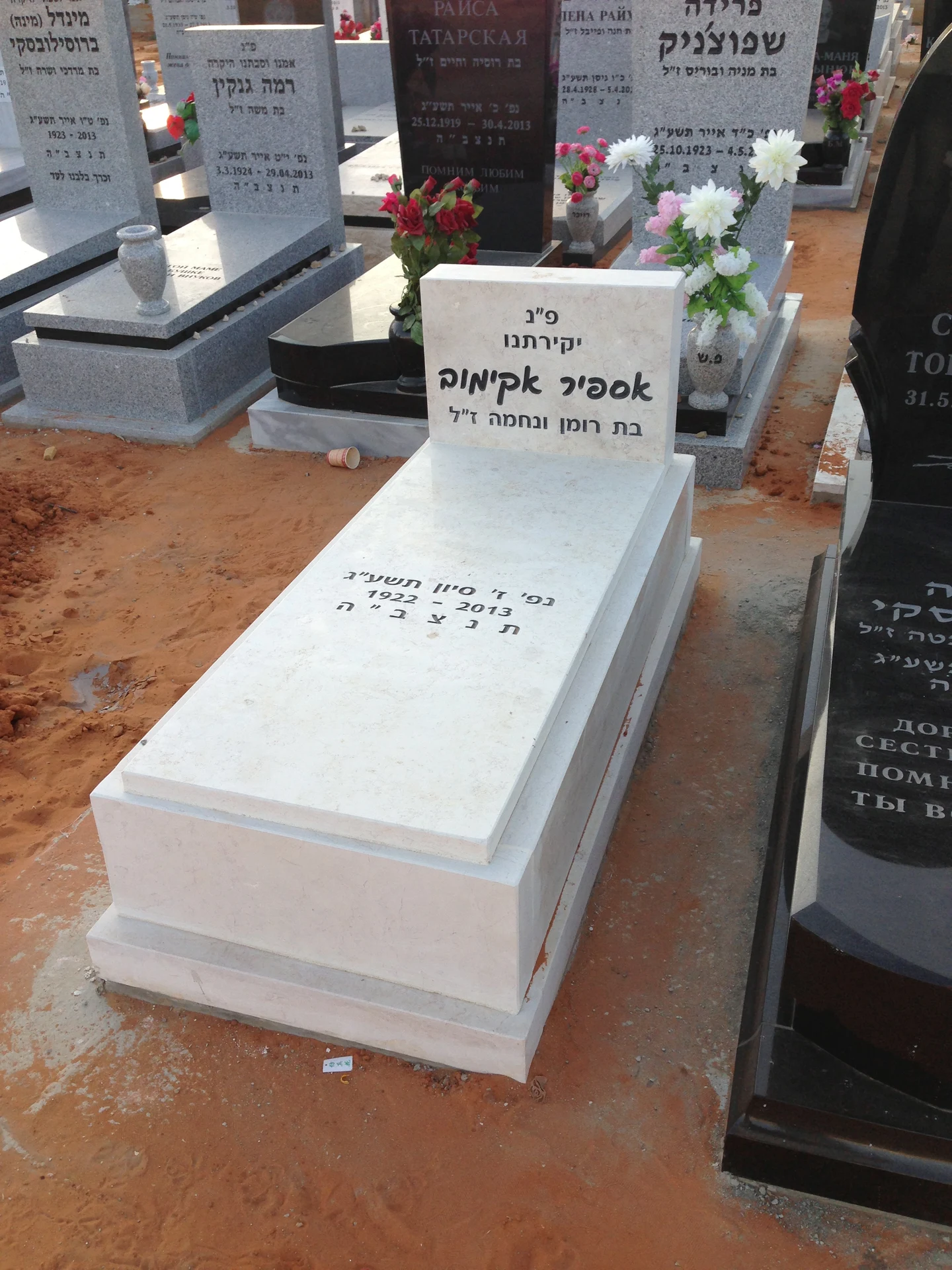
Headstone Inscription Examples: Short and Personal Words
Inscription examples for families: short, personal and shared wording for a couple, line layout and approving details before engraving.
Read the guide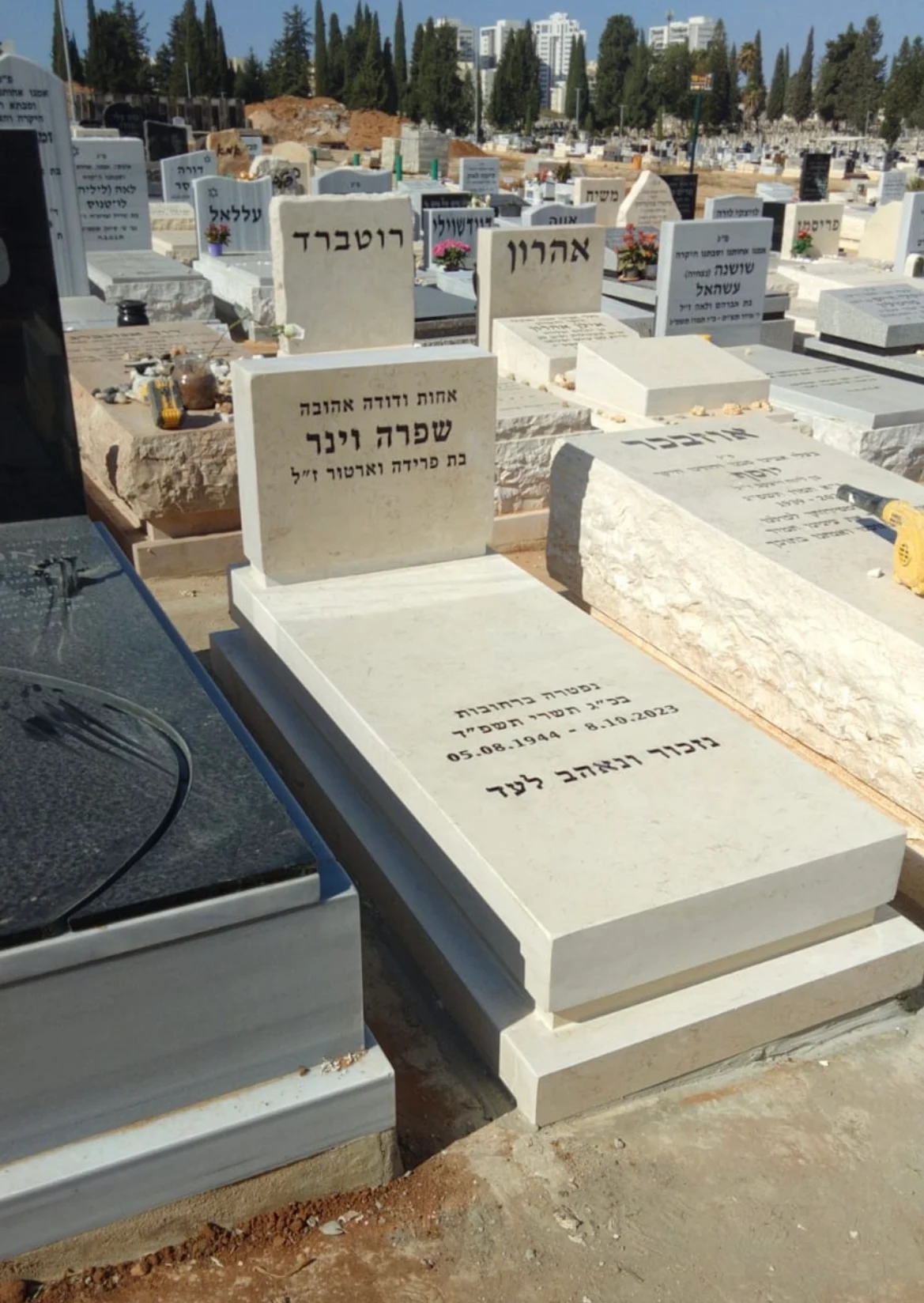
Jewish Headstone Inscriptions: What to Check Before Engraving
Jewish headstone wording and family traditions: parents’ names, Hebrew dates, traditional phrases and languages. Questions to discuss with your rabbi and cemetery.
Read the guide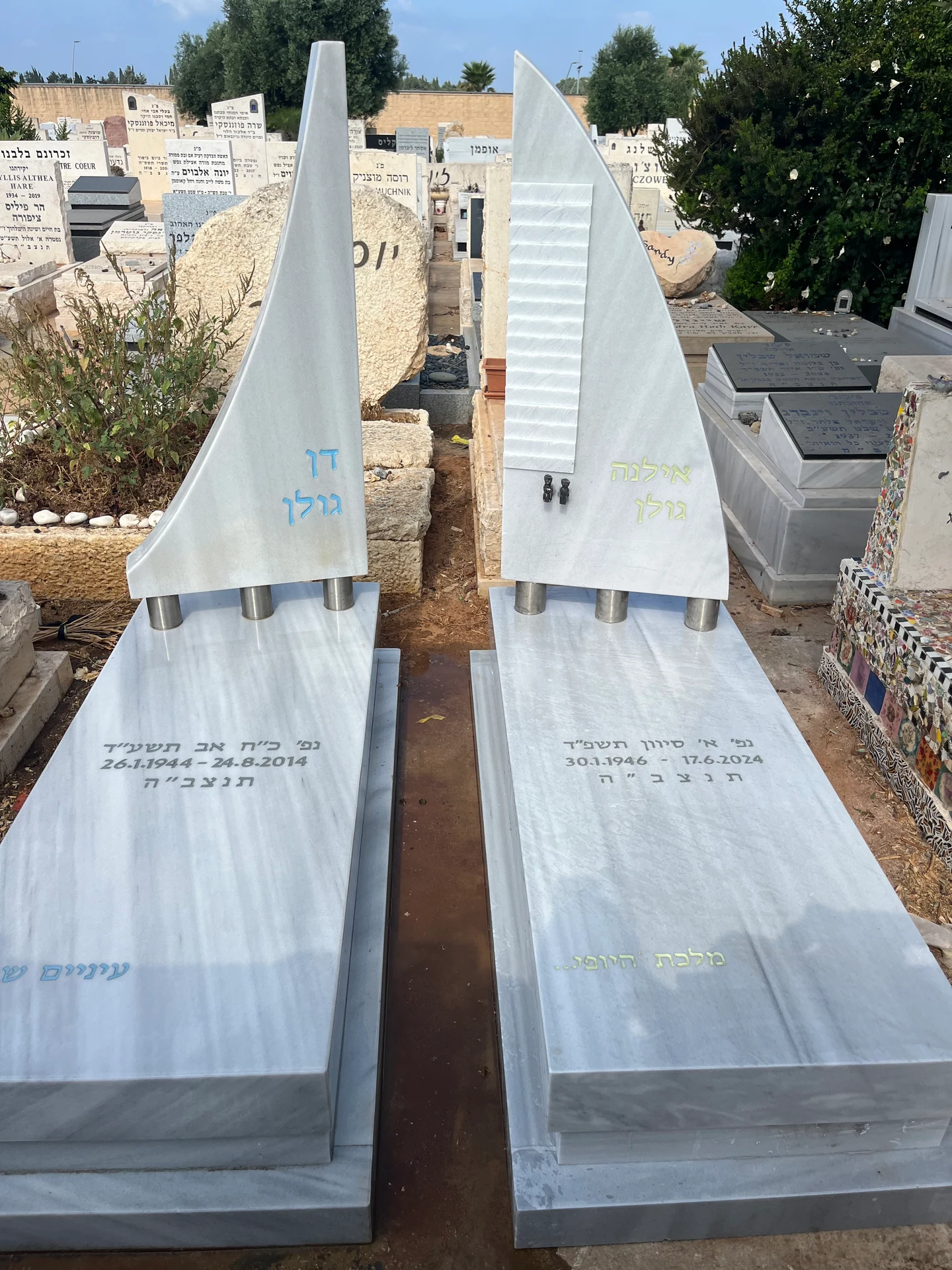
A Double Headstone: Planning for Two Names and a Shared Memory
Double headstones: shared and separate designs, future inscriptions, matching stone and the difference between adjacent graves and double-depth burial.
Read the guide