Comparing Headstone Designs: How to Find the Right One
Found several photos you like but unsure how to choose? Turn them into a shortlist you can compare: what each shows, what it leaves out and what needs adapting to your project.
Contents 13 sections
What Are You Looking for in the Examples?
People browse examples at different stages. Some families are exploring what is possible; others already know they want light stone, a particular upright or a shared memorial. Identify where you are in the process so you need not dwell on details before they become relevant.
If you are unsure, begin with broad contrasts: straight or curved, light or dark, worked slab or natural boulder. Once a direction is clear, compare proportions and details such as the name, frame and symbol. This prevents every new photo from restarting the decision.
Distinguish an impressive photograph from what you want to experience at the grave. A large sculpture may photograph well, while your family would prefer the name to lead. For an introduction to styles, see Headstone examples by colour, shape and style. Here we focus on choosing between them.
Start with the Plot Requirements, Then Your Preferences
What is already known?
Keep the cemetery name, plot details, burial type and any written requirements or professional measurements alongside the photographs.
What remains open?
Stone, shape, wording length and additions. Explore alternatives without deciding every detail at once.
What needs checking?
Dimensions, height, shared layouts, accessories and installation. A photograph of another grave cannot confirm these.
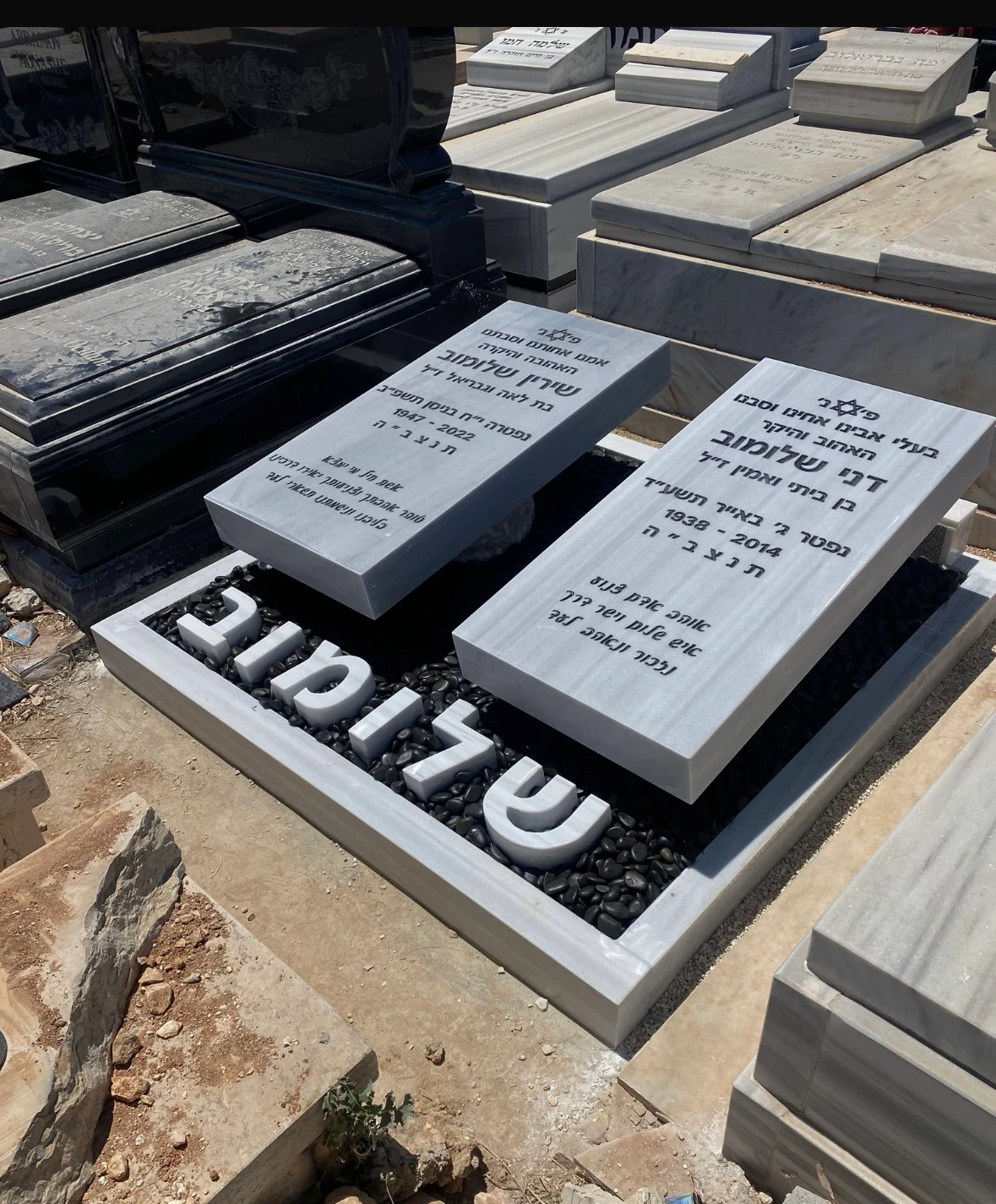
Lettering on a ground-burial memorial may inspire a niche plaque without sharing its structure. The name layout of a double memorial may inspire a layered-burial design, but the construction still needs separate assessment. A photo can be useful for just one idea.
If the burial arrangement is unclear, clarify it first. An unusual design need not be ruled out, but your choice must suit the actual plot. the guide to headstone types explains the differences between structures.
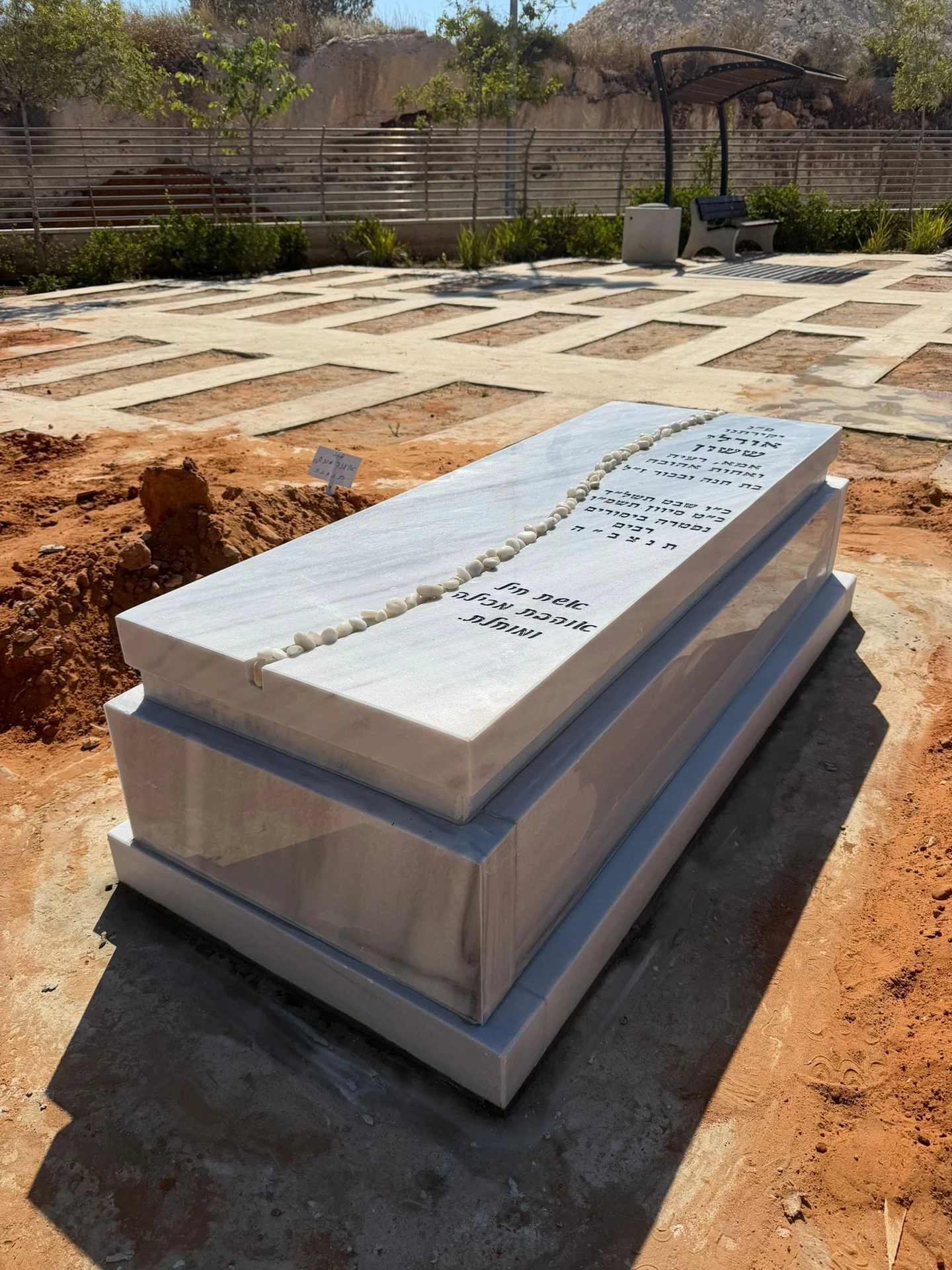
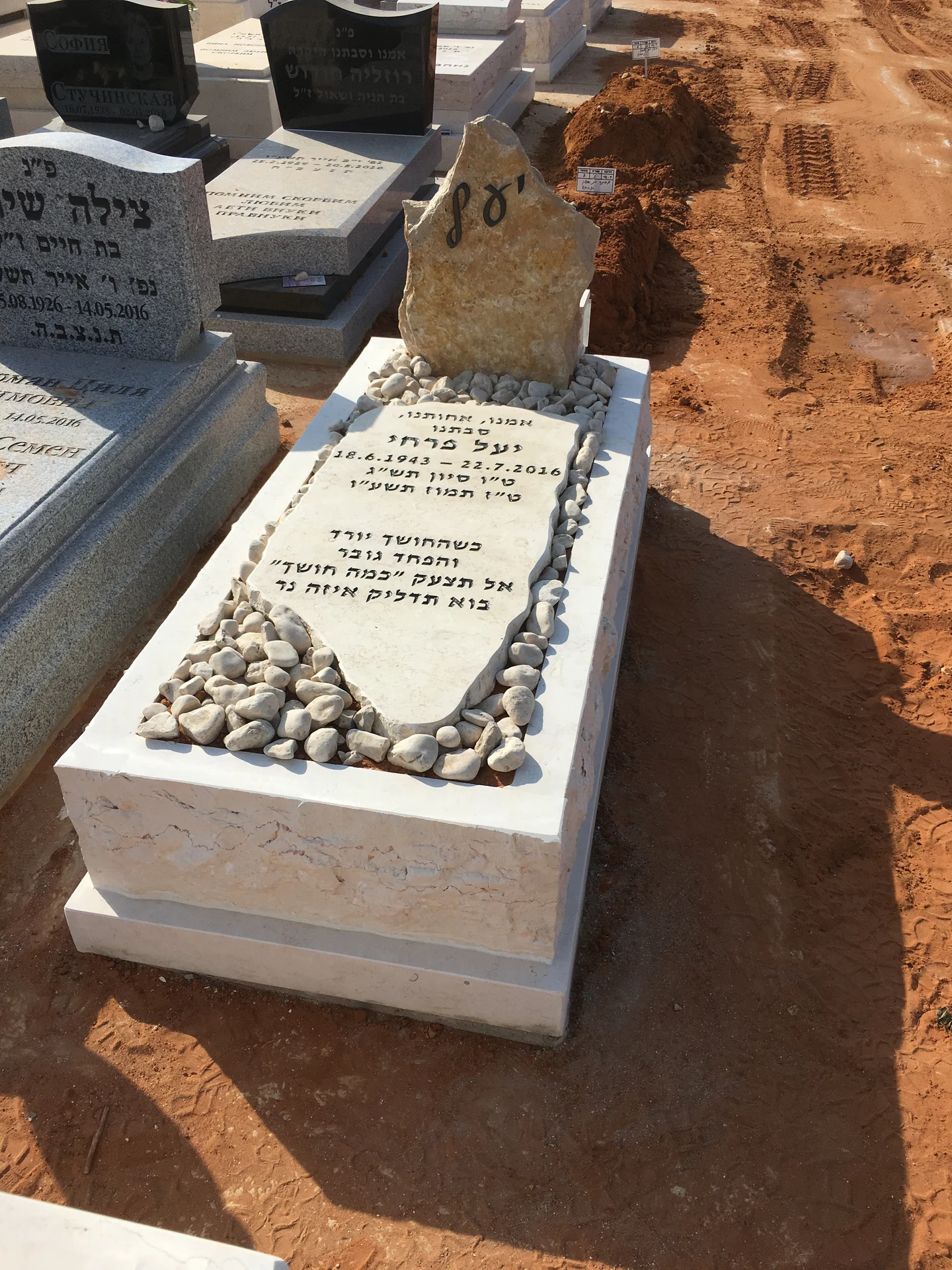
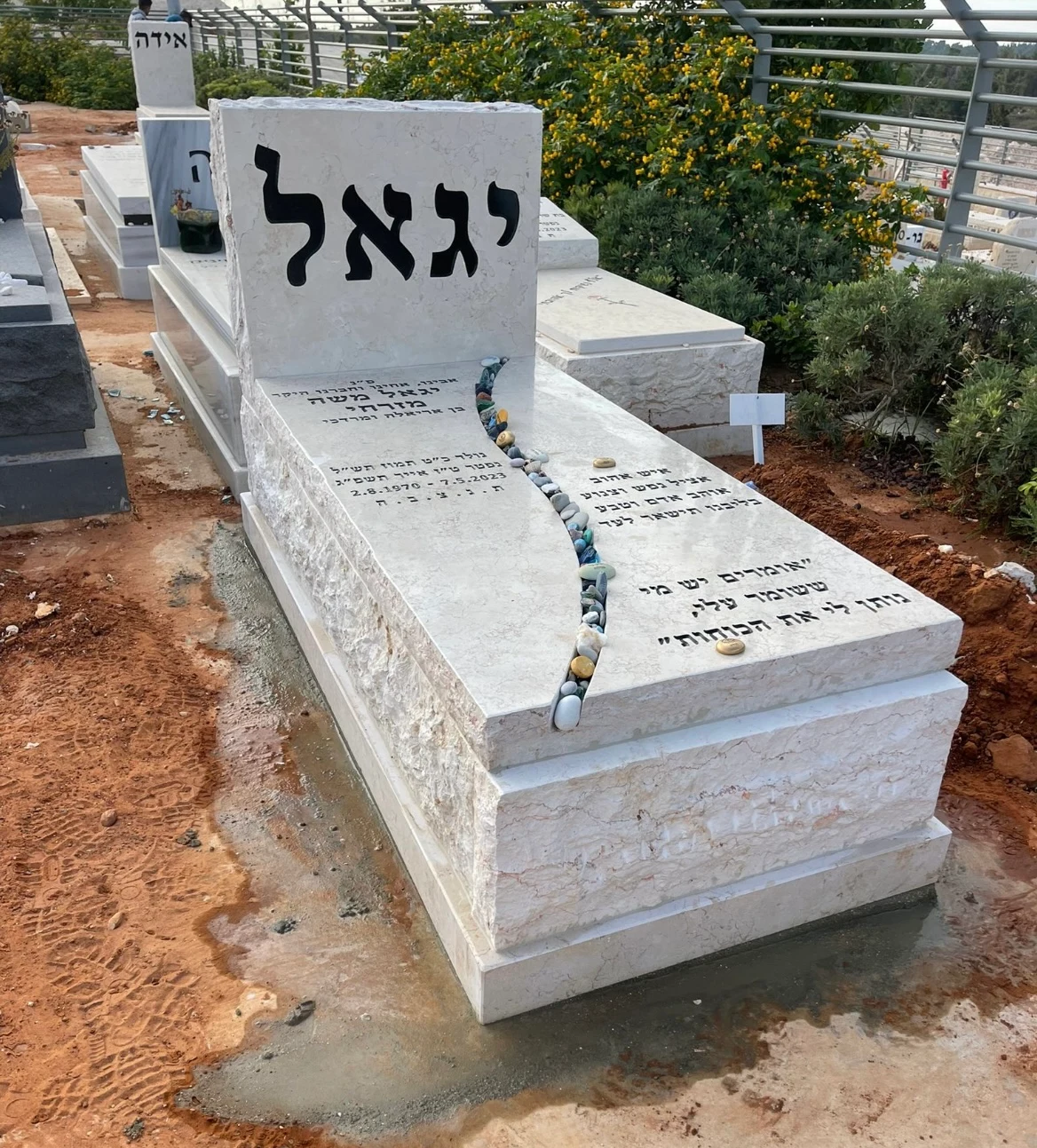
A flat stone surface alongside a natural upright and pebbles. Begin with shape and texture before comparing price.
Compare One Feature at a Time
Comparing dark stone with a sculpted upright against a light, flat design changes several features at once. It becomes hard to identify whether you prefer the stone, height, lettering or overall feel. Describe each example using the same criteria:
Scroll the table sideways to see every column.
| Topic | What to note beside the photograph | What still needs checking |
|---|---|---|
| Shape | Straight, curved, boulder or sculptural | Dimensions and proportions on your plot |
| Colour | Light, dark, warm, cool or combined | A sample of the proposed material |
| Lettering | The name on the upright, on the slab or across two areas | A full layout of your own wording |
| Personal feature | Heart, book, symbol or small ornament | Meaning, placement and method |
| Shared design | One plaque or several areas | Burial type and future additions |
The table helps explain your preference, not score the designs. If two examples receive almost identical descriptions, you may have enough visual references to move on to material, price and feasibility.
Comparing a Flat Slab and a Natural Boulder
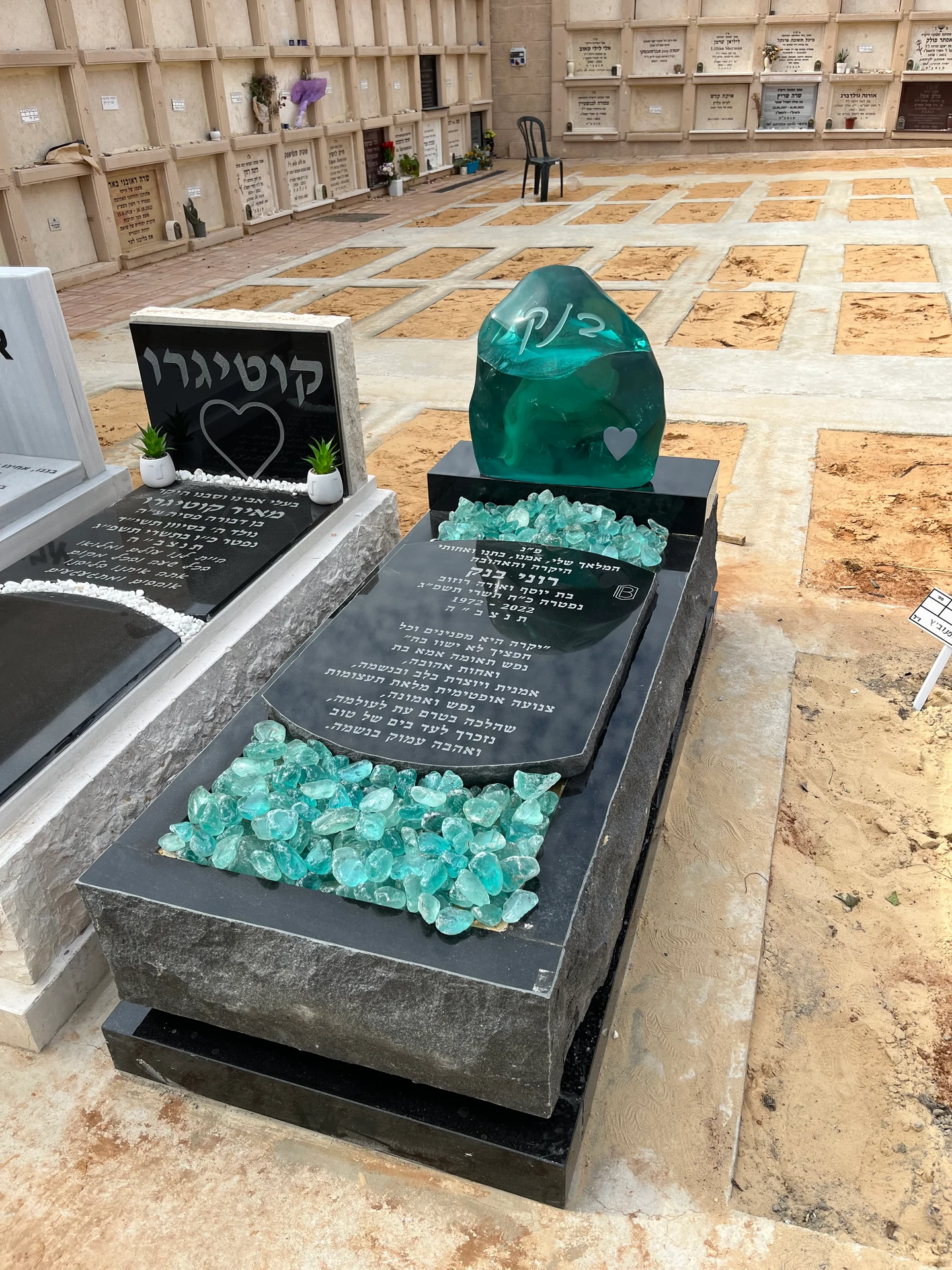
The two photographs show different approaches. In the light memorial, the writing surface and frame organise the design. In the boulder design, the natural shape and separate stone areas lead. They are different design choices, not necessarily different price extremes; each needs a specification.
For longer wording, compare the usable inscription areas. For a natural silhouette, inspect the actual proposed boulder. You can explore combining the quiet layout of one example with the upright of another, but review the result as a whole.
Ask which feature you most want to retain. That makes it possible to adapt an example that exceeds your dimensions or budget. You need not abandon the whole idea because every detail in the photo cannot be reproduced.
Colour, Light and Finish: Avoiding Surprises
Tree shade, sky reflections and warm sunlight all affect the colour in a photograph, as do different screens. Use images to select a general direction, rather than as the only approval of the final shade.
View a sample of the proposed stone in the chosen finish. With veining or grain, check whether a small sample represents a large surface. For several pieces, see how they relate and what natural variation to expect.
You do not need a geology lesson. Ask for a clear material name, sample and explanation of what will be supplied. Mention any unwanted feature before approving the cut. Seethe stone types guide explains what to check beyond a trade name.
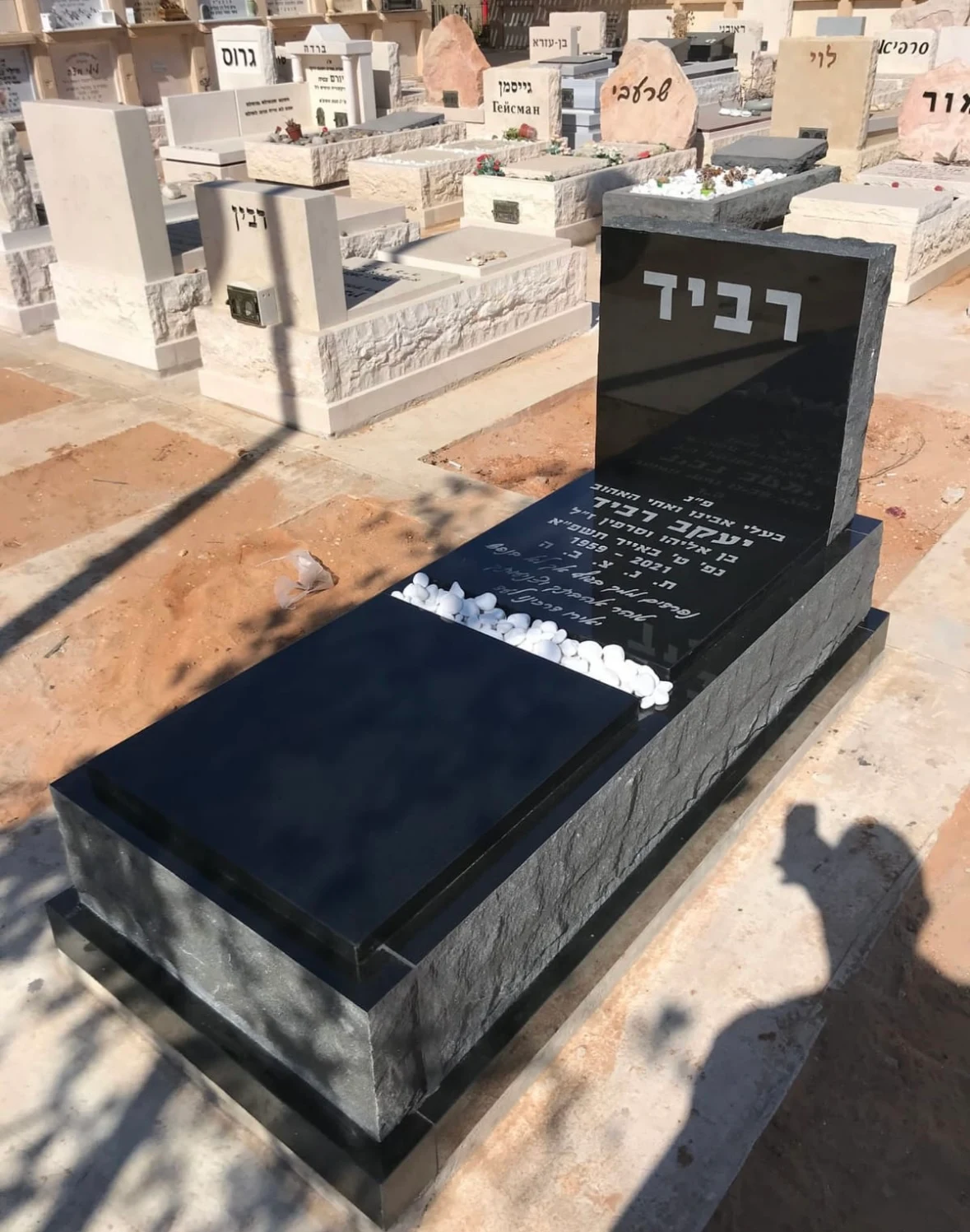
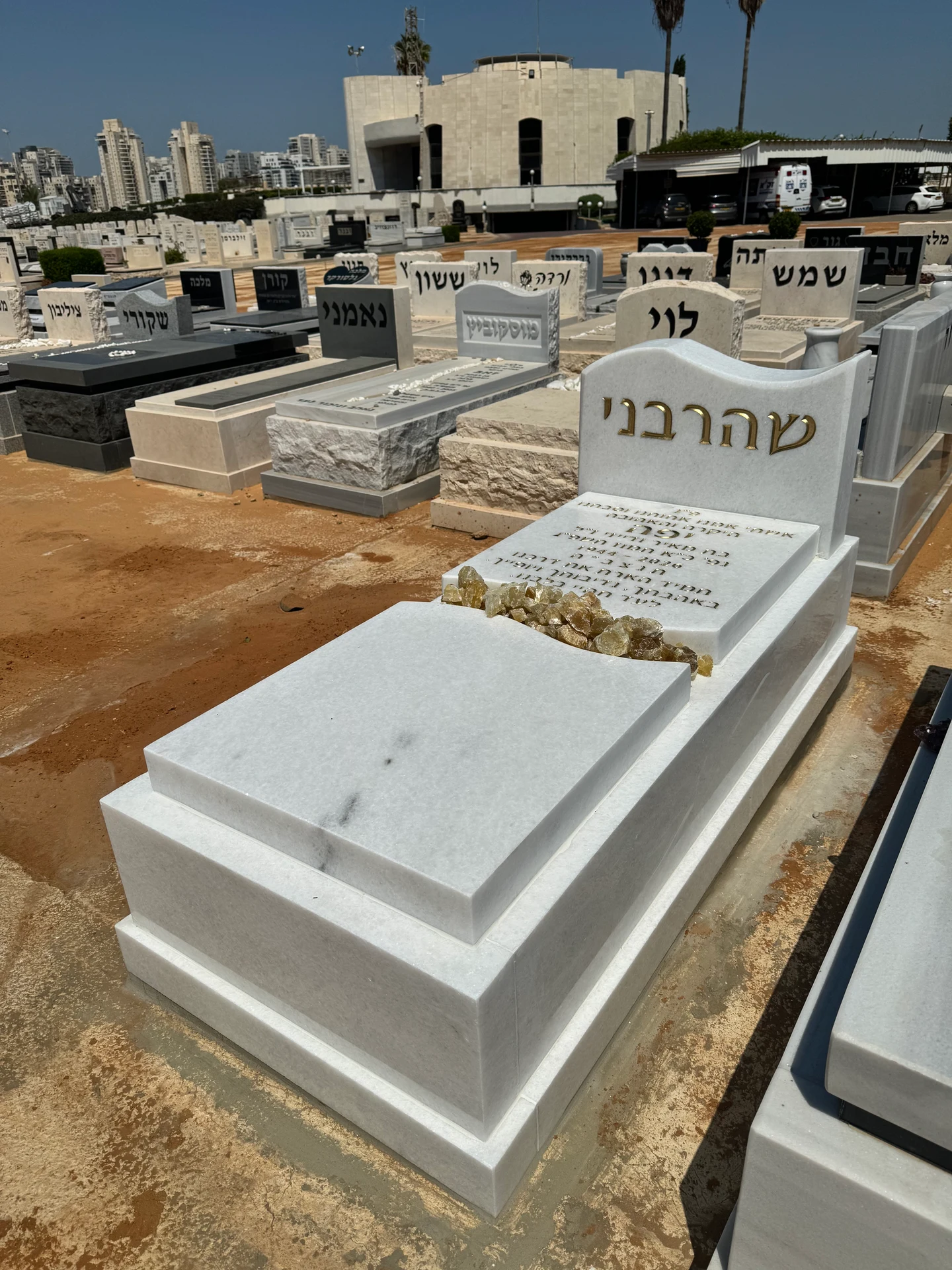
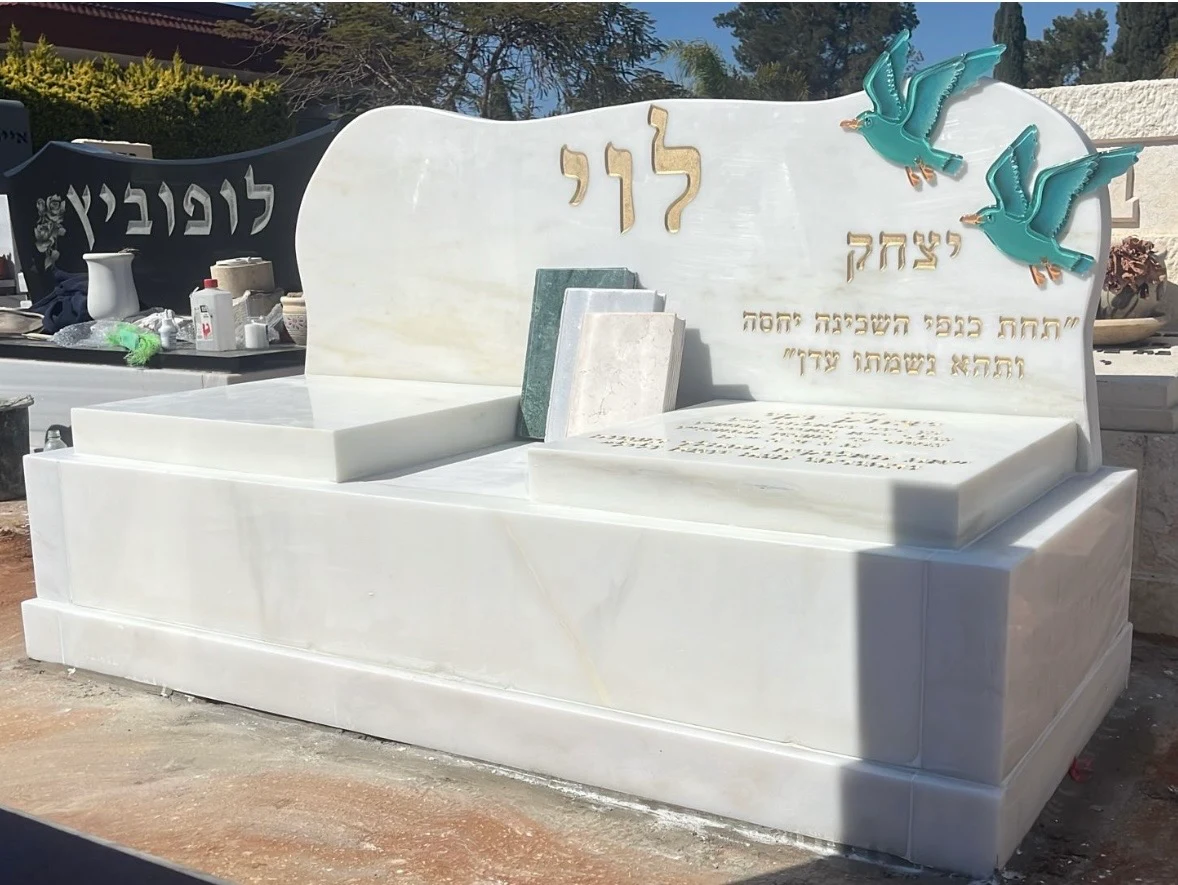
A dark and a light headstone: compare upright shape, proportions and inscription placement too.
You Do Not Have to Copy Every Detail
A photograph records decisions made for another project: size, colour, layout, wording and accessories. Your family may want only some—for example, a rounded upright without its border, or a light base without its symbol. State this explicitly so the quote does not include unwanted additions.
For each photo, write “Keep,” “Not needed” and, if useful, “Unsure.” Ordinary language is enough: “We like the large name, but not the two-colour combination” gives a designer clear direction.
Next, request one design bringing your choices together. Combining an upright, base and symbol from separate examples requires checking dimensions and proportions. A clear sketch shows whether the complete idea still works.
Three Examples of Making a Choice
A distinctive idea with an understated result
Choose one personal feature and keep the rest simple. Consider whether a smaller symbol or an engraving carries the same meaning.
A favourite reference within a limited budget
Identify the essential feature—material, shape or personal motif—and request an alternative that changes something else, with a clear explanation of the revised specification.
Two inscription areas are needed
Compare the balance of names and the space for each inscription. Discuss burial type, installation and future additions separately.
These are planning examples, not accounts of completed orders or promises of a particular price. They show how to adapt a favourite photograph by identifying what matters to the family and checking how it can work at the actual site.
If two options appeal, request an organised comparison before deciding. Give the family the same criteria to consider, rather than choosing whichever image was most recently shared.
See Your Own Inscription in the Design
A short name and two lines can leave generous space. A longer name, two languages and a personal phrase may not suit the same layout. Put your actual wording into a drawing at the intended dimensions before approval; an early draft is useful if its likely length is known.
Keep a clear hierarchy: name, personal details and dates, then the family's chosen line and decoration. If space becomes tight, first revise line breaks and remove unnecessary words. Shrinking everything may lose what you liked in the original example.
You need not copy the photographed family's words. The reference shows arrangement and appearance; the inscription should be your own. Seeinscription examples offers original wording to adapt, whilethe inscription guide explains approval of the final production version.
Pricing a Design: What the Photograph Cannot Tell You
A photograph does not specify material quantity, full dimensions, fabrication, text length or installation conditions. A price quoted for similar-looking work may not apply. Your quote must cover your specification and site.
Request two alternatives with the same starting brief: burial place, amount of lettering and additions. Then change the stone or shape to see its effect. Ask what the total includes and which components or charges remain outside the quote.
Rubi does not currently publish an approved numerical price for every example. Send reference photos to start a discussion and receive a quote based on your project details. the memorial pricing guide helps you compare more than just the total.
A Shortlist to Share with Rubi
Main reference
Your closest match, with one sentence explaining why.
Alternative reference
An option that differs in material, shape or style. Omit it if your direction is already clear.
An essential feature
For example: a prominent name, light stone, two inscription areas or a particular symbol.
A point of flexibility
This allows a focused adjustment if space or budget is limited.
Location and timing
Cemetery, known burial type and preferred date. Mark missing details as still to be confirmed.
Do not send personal documents unrelated to planning the work. Initially, we need to understand the project and direction. If further information is needed for coordination or approval, clarify exactly what is required and who will receive it.
A short, explained selection is more helpful than dozens of photos without context. It lets Rubi ask focused questions and propose alternatives that fit both your wishes and the practical brief.
Making a Decision as a Family
Ask each relative to choose one important feature, not an entire memorial to reproduce. One may mean colour, another lettering, another a symbol. These preferences may fit together. If they conflict, discuss the specific decision rather than whose photograph is better.
Appoint one person to coordinate the version sent to the maker. Everyone can contribute, but conflicting approvals should not be sent in parallel. Keep an updated list of decisions and open points, then approve one drawing and inscription.
For a shared or family memorial, decide what should be consistent between names and what can remain personal. Two texts need not be identical to create a coherent whole. Test the actual wording against the available space.
After You Find Examples You Like
Can we plan remotely using photographs?
You can begin remotely. Some decisions require measurements, material samples or further approval. Agree which details need checking on site and which can be approved from documentation.
How many examples should we compare?
Two or three clearly different examples are usually enough to begin. If they all look similar, choose one and list the details still undecided.
What if no photograph is exactly right?
You can start with a description: light stone, a rounded shape, a large name and a small personal detail. Reference photos help communicate an idea, but are not a requirement for designing a memorial.
Will a different stone preserve the same appearance?
Colour, pattern and fabrication possibilities may differ. Inspect the actual proposal and check how the material change affects lettering and components. Simply changing the stone name is not enough.
When does an example become an order?
Sending a photograph is not final approval. Before production, agree the specification, drawing, inscription, price, dates and terms. Keep the inspiration image alongside those documents, not in place of them.
Taking Your Chosen Direction Forward
Once you have chosen an example and identified its important features, move from browsing to discussing a specific project. Rubi can review the plot, stone, wording and options within your budget. The initial consultation is free and carries no obligation.
For more visual references, visitheadstone examples by style orheadstone catalogue. To understand all the ordering stages, see the complete headstone planning guide takes you from material selection to installation and handover.
Have a question about your headstone?
Ask Rubi about stone, inscriptions and options, free and without obligation.
Related information
Headstone Ideas by Style, Colour and Shape
Explore Rubi’s light, dark, natural, double and sculpted headstones in large photos, with explanations of their design and the details to consider.
Read the guide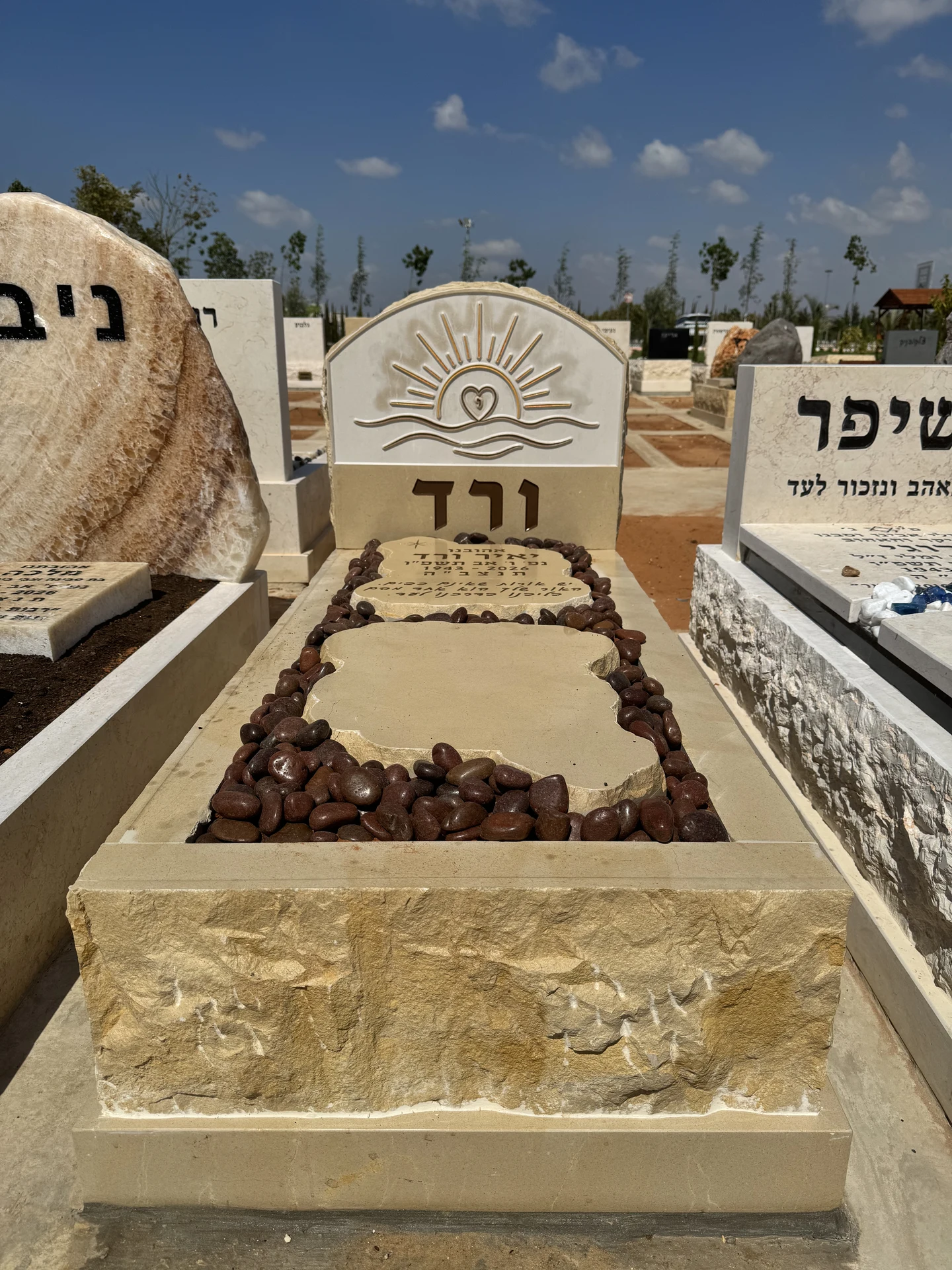
Planning a Headstone: A Complete Guide from Design to Installation
A new headstone from first decisions to installation: stone, design, personal words, cost, approvals and care, with photos and practical examples.
Read the guide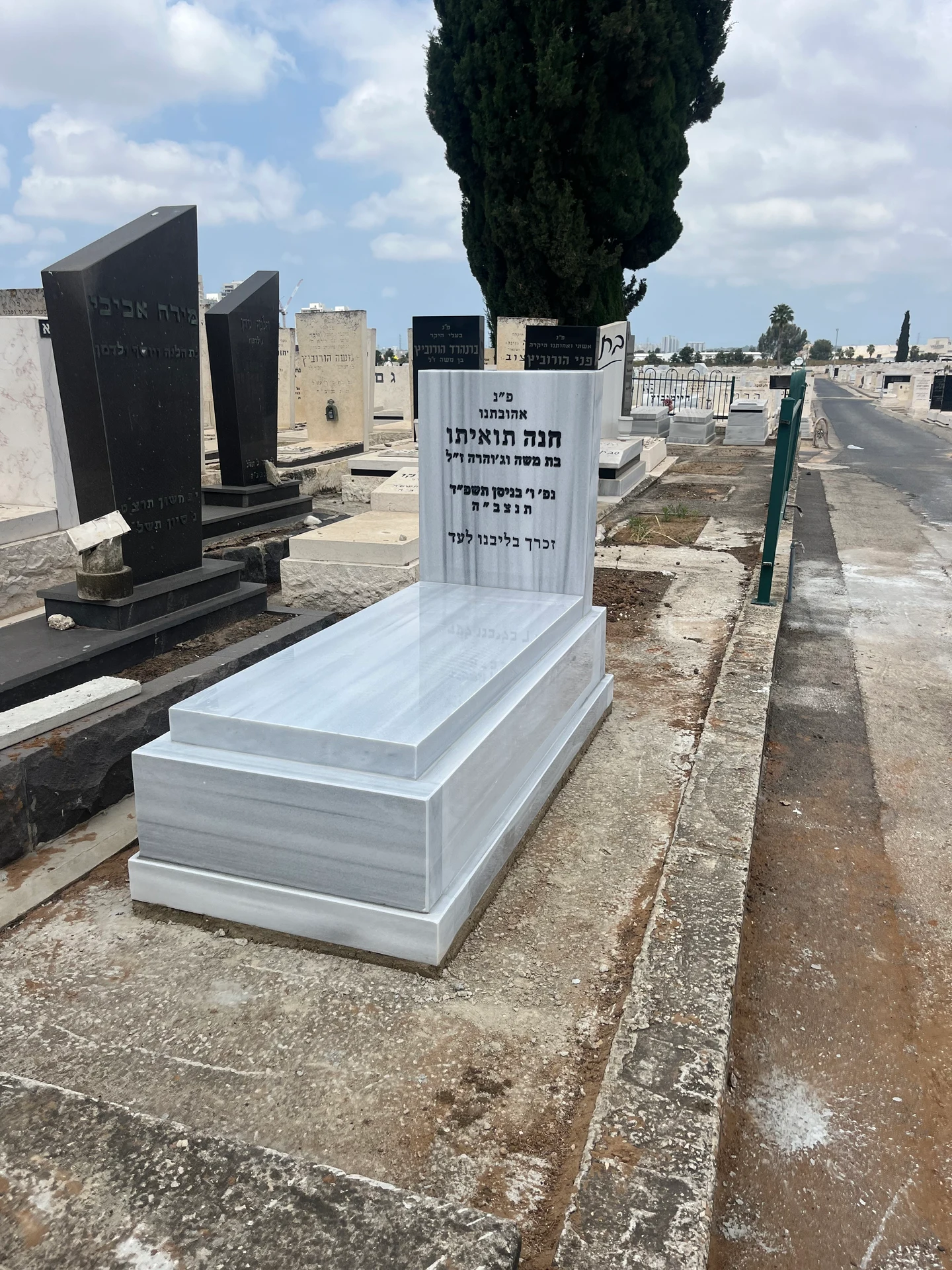
Headstone Prices: What Does a Headstone Cost, and What Is Included?
Headstone prices depend on stone, dimensions, inscriptions and installation. Learn to compare quotes, recognise extras and plan within your budget.
Read the guide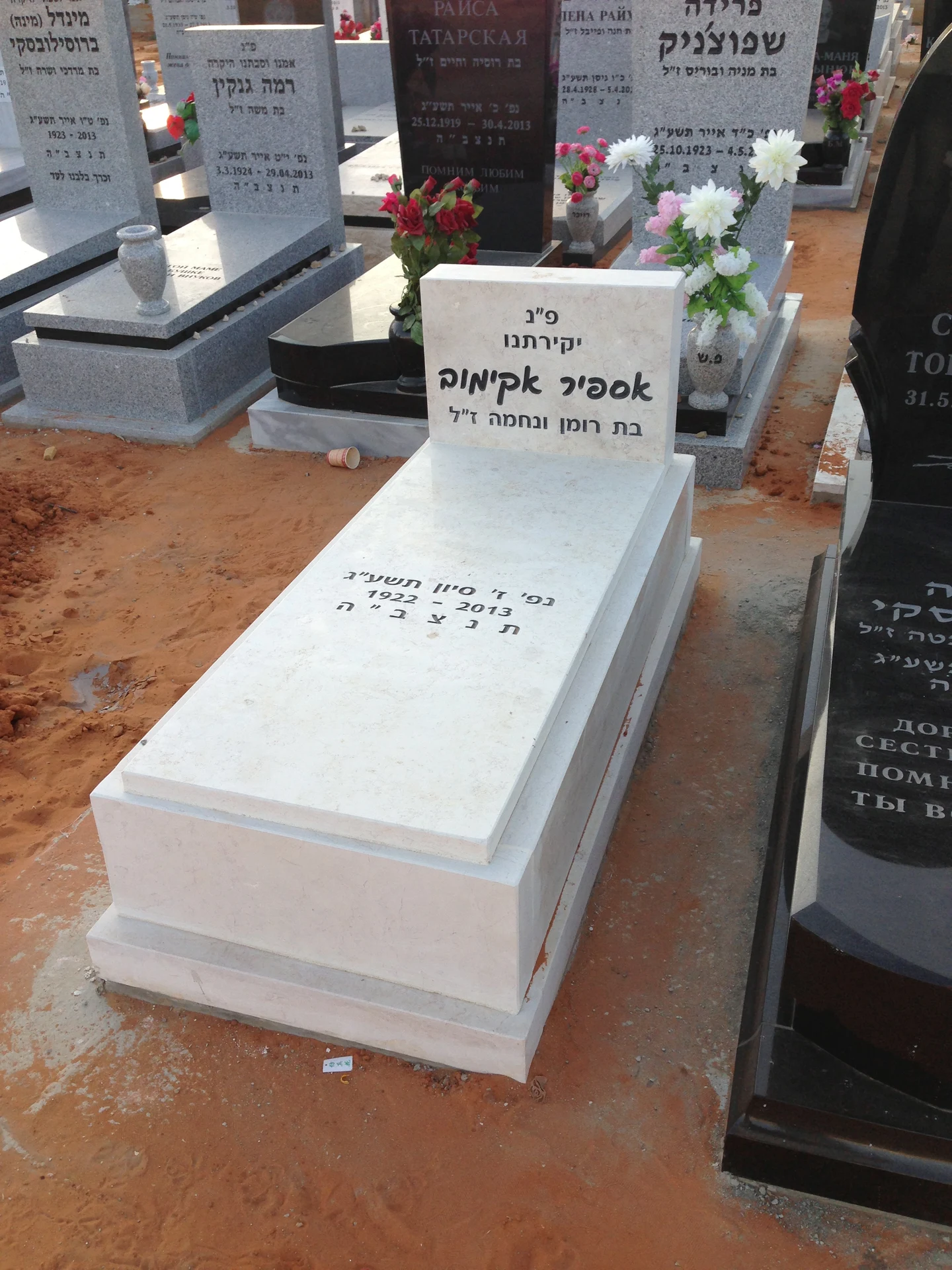
Headstone Inscription Examples: Short and Personal Words
Inscription examples for families: short, personal and shared wording for a couple, line layout and approving details before engraving.
Read the guide