Planning a Headstone: A Complete Guide from Design to Installation
When choosing a headstone, it can be hard to know what to ask first. This guide puts the decisions in order: location, stone, design, wording and installation. Read it from the beginning or go straight to the section you need.
Contents 19 sections
What Does Ordering a Headstone Involve?
A headstone is the memorial structure on a grave, or the inscribed plaque associated with the burial place. It carries the person's name and the details and words chosen by the family. Ordering one involves much more than a slab with a name: stone, shaping, dimensions, lettering layout, joints, delivery and installation. Together, these determine its appearance and how it can be visited and cared for over the years.
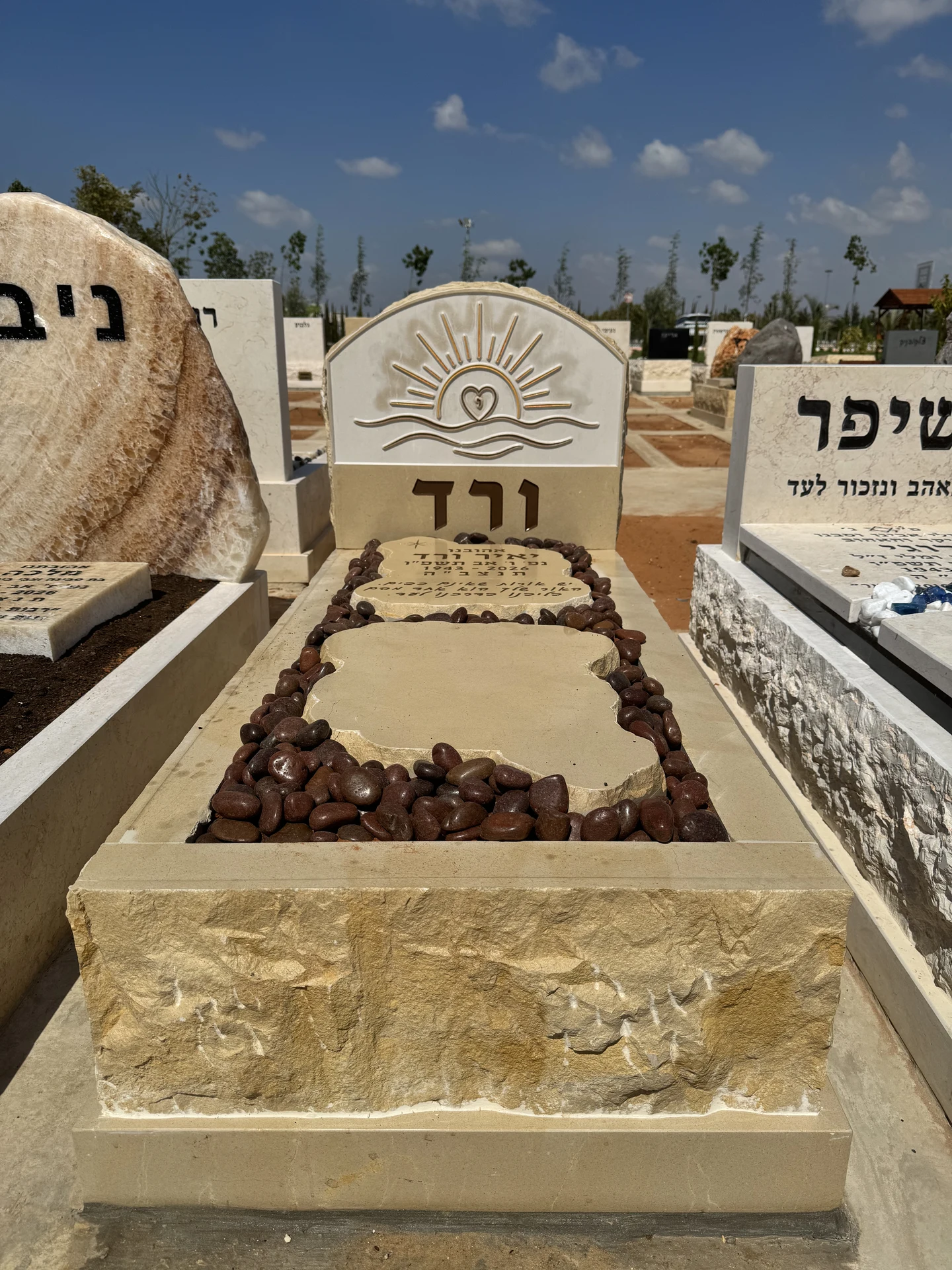
A ground-burial headstone may have a base, a horizontal slab and an upright. A burial-niche plaque needs a different design, and a shared plot must accommodate more than one name. There is no single structure for every setting. Begin by identifying the work your plot requires, before choosing a colour.
This is a deeply personal choice. You may prefer a simple, understated memorial or a design with sculpture and details from the person's life. Both can be dignified and meaningful. A higher price or more decoration does not measure love or respect.
Details to Gather before Your First Call
You do not need a finished design. Gather the cemetery name, plot details, burial type and any instructions from the management. A wider photograph helps show the setting but does not replace professional measurements. If the work needs to match a neighbouring headstone, photograph it and the space between the plots too.
Alongside the plot details, note your design priorities, total budget and any date the family needs to work towards. Include what you dislike, too. “Light stone, a prominent name and no decoration” is a more useful starting point than trying to name a particular model.
List missing information as questions to resolve. A missing row number need not delay the first conversation, but production should not be approved on an assumption about the burial site. Choose one family contact to pass on clear, agreed instructions.
Six Decisions to Make, Step by Step
Identify the plot
Confirm burial type, dimensions and local rules to establish the design limits.
Choose a direction
Collect two or three examples and consider their shape, colour and personal details separately. You do not have to choose everything at once.
Define the material and work
Specify the stone, how it will be worked and which additions are included.
Plan the inscription
Prepare names, dates and wording, then check them in a correctly sized layout.
Approve the quote and production version
Agree price, warranty, dates and scope. Keep the approved drawing and inscription.
Coordinate delivery and installation
Establish who coordinates cemetery work, how the result is checked and whom to contact later.
Some decisions develop together. A long inscription affects the space needed for lettering, while the stone you like may influence the possible shape. When a decision changes, revisit the details it affects. Pause to update the plan rather than working from a sketch that no longer represents the order.
Matching the Headstone to the Cemetery and Burial Type
Cemetery requirements can cover dimensions, construction, access, accessories and which contractors may work on site, as well as colour and height. Check the rules for the actual plot. Neither an example from another cemetery nor a photograph of a neighbouring headstone establishes the current requirements for a new order.
Tel Aviv–Yafo Chevra Kadisha — opens in a new window, for example, publishes local requirements for contractor registration and construction. These apply in their own context, not automatically to every cemetery. Request the rules for your plot in writing where available, and ensure the designer and installer follow them.
A niche memorial is usually designed within a defined plaque area. A layered-burial memorial must account for the burial arrangement and possible later work. Two adjacent graves may have a shared base or separate memorials. These differences are covered inthe guide to headstone types, with links for each burial arrangement.
What Does a Clear Specification Look Like?
A useful specification describes the finished work in terms you can check. “A luxury memorial” is not enough; stone, dimensions, components and lettering make the offer concrete. Families need not design joints or choose fixing methods themselves, but should know that the professional has assessed them and priced the complete work.
Scroll the table sideways to see every column.
| Order component | What to record |
|---|---|
| Stone | Material name, colour, finish and sample approval process |
| Structure | Main dimensions, number of components, and the shape of the upright and base |
| Inscription | Approved wording, language, lettering method and line layout |
| Additions | Candle holder, ornament, sculpture or another material, if ordered |
| On-site work | Delivery, installation, coordination and clearance within the agreed scope |
| Terms | Total price, payment, dates, warranty and changes |
If the quote uses an unfamiliar stone trade name, ask to see a sample and confirm how closely it represents the material reserved for your project. Record the approved drawing's version or date on the order so the price and production refer to the same design.
Choosing Stone: Go beyond the Photograph and Name
A photo suggests a design direction but cannot tell you everything about the stone. Material sold under one trade name can vary in colour, pattern and the shape of the block. Inspect the selected piece, or a representative sample with an explanation of expected variation. Discuss any important vein, marking or colour transition before cutting begins.
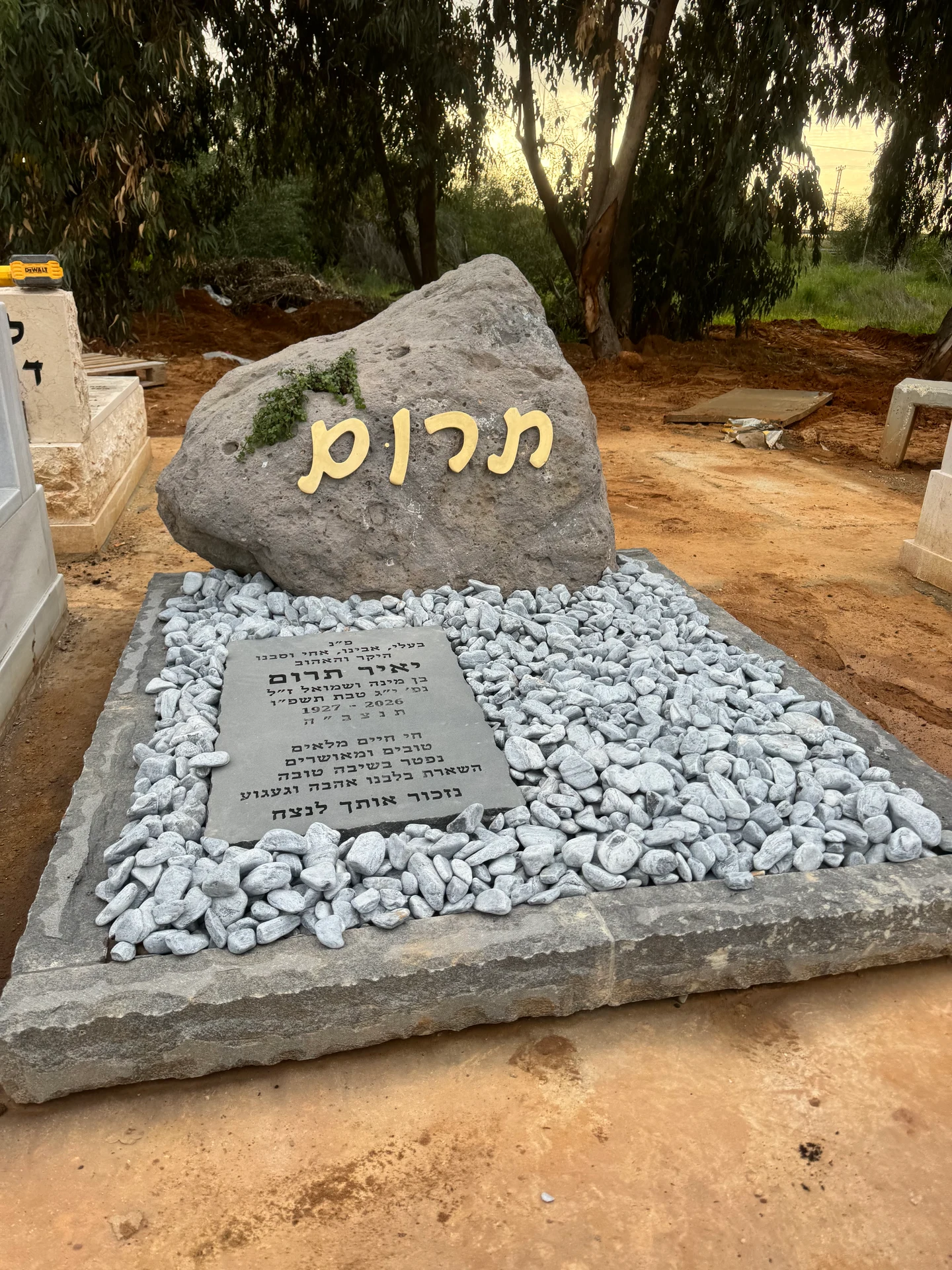
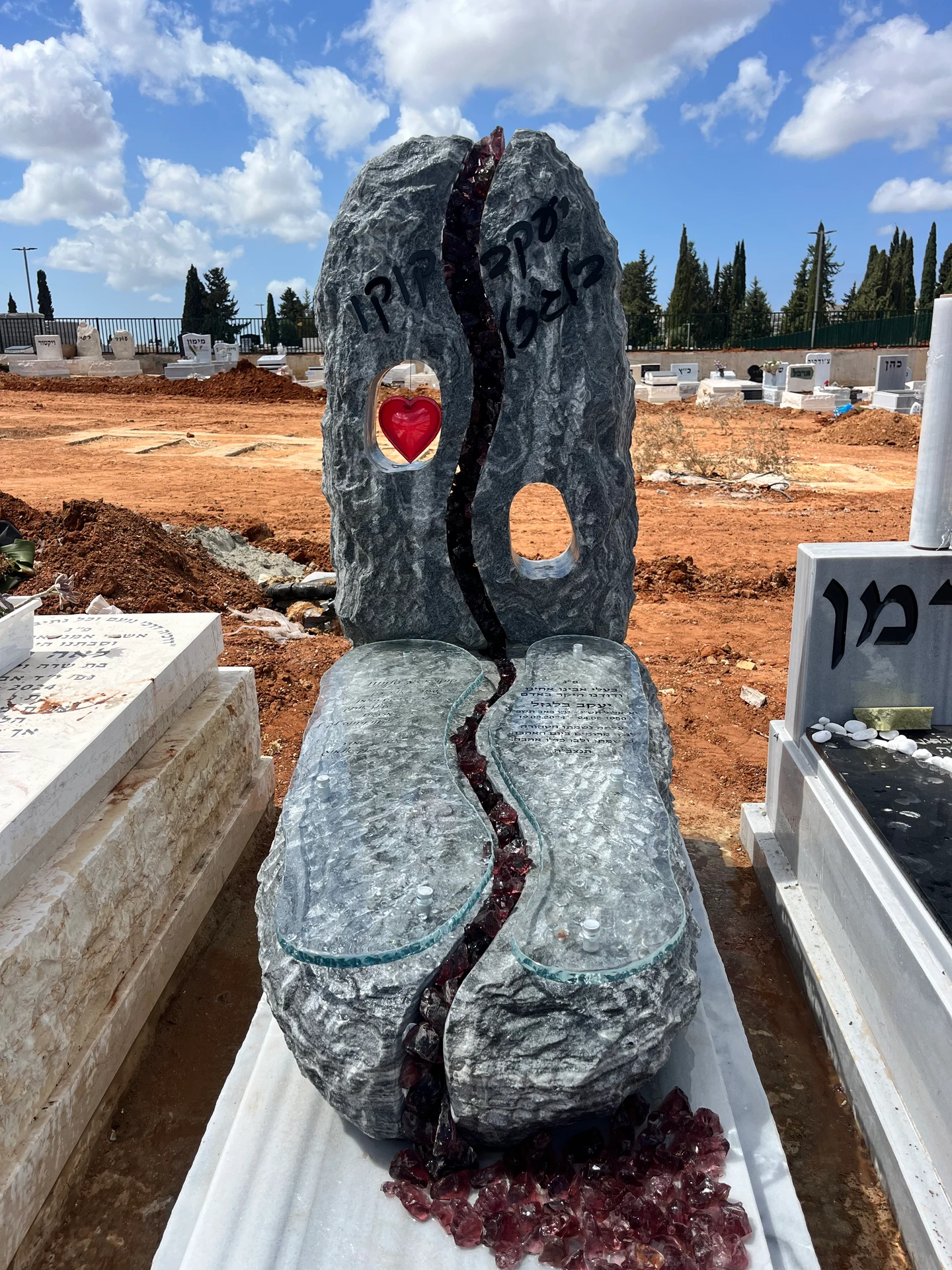
Light stone can create an open, quiet impression; dark stone can emphasise pale lettering and clean outlines. A natural boulder offers an irregular silhouette. These are design choices, not quality rankings. Assess the actual material, finish and construction: dark stones are not all alike, and surfaces loosely described as “marble” may need different care.
Ask to see the finish too: polished, matt and rough surfaces can make the same stone look different. A small sample shows colour but may not reveal the pattern across a larger slab. Discuss how the pieces will be positioned and which part of the pattern will sit beside the name. In ourthe memorial stone guide introduces the main material families, whilethe natural stone guide focuses on choosing a boulder.
Proportions: Upright Stone, Base and Open Space
A photograph draws attention to the upright, but a real design needs to work as a whole. A wide upright on a narrow base, a tall addition beside a low slab or a large ornament near the name changes the entire composition. Ask for front and side views, or photographs explaining the proportions.
Consider how people will visit: where they approach, stand to read and see the name, and whether an accessory obscures the wording. Mention any wish to leave small stones or flowers. Accessories also depend on cemetery rules; convenience does not authorise extending beyond the plot.
Making a detail smaller can improve the whole design. A personal motif can remain meaningful while leaving the name as the focus. Empty space is useful: it keeps lettering readable and lets individual details stand out. An elaborate memorial need not fill every surface.
Turning a Personal Memory into a Workable Design
A hobby, profession, favourite landscape or familiar gesture can inspire the design. It might become an overall shape, a small ornament, an engraving or a sculpted element. Each approach needs different space, work and budget. A meaningful memory does not have to become a large sculpture.
For example, a family wants to remember a love of books while keeping the design restrained. Options include a book-shaped upright, a small engraved book or a personal line about reading. All three express a similar meaning differently. This is a planning example, not a completed commission, showing how simplifying the form need not lose the idea.
Bring Rubi a photograph or describe your idea in your own words. Together you can assess materials, dimensions, fabrication and cemetery approval. Glass and metal additions also require planned connections to the stone and appropriate future care. Read more about bespoke and sculptural headstones helps turn an attractive reference into a practical project.
Planning the Inscription in Two Stages
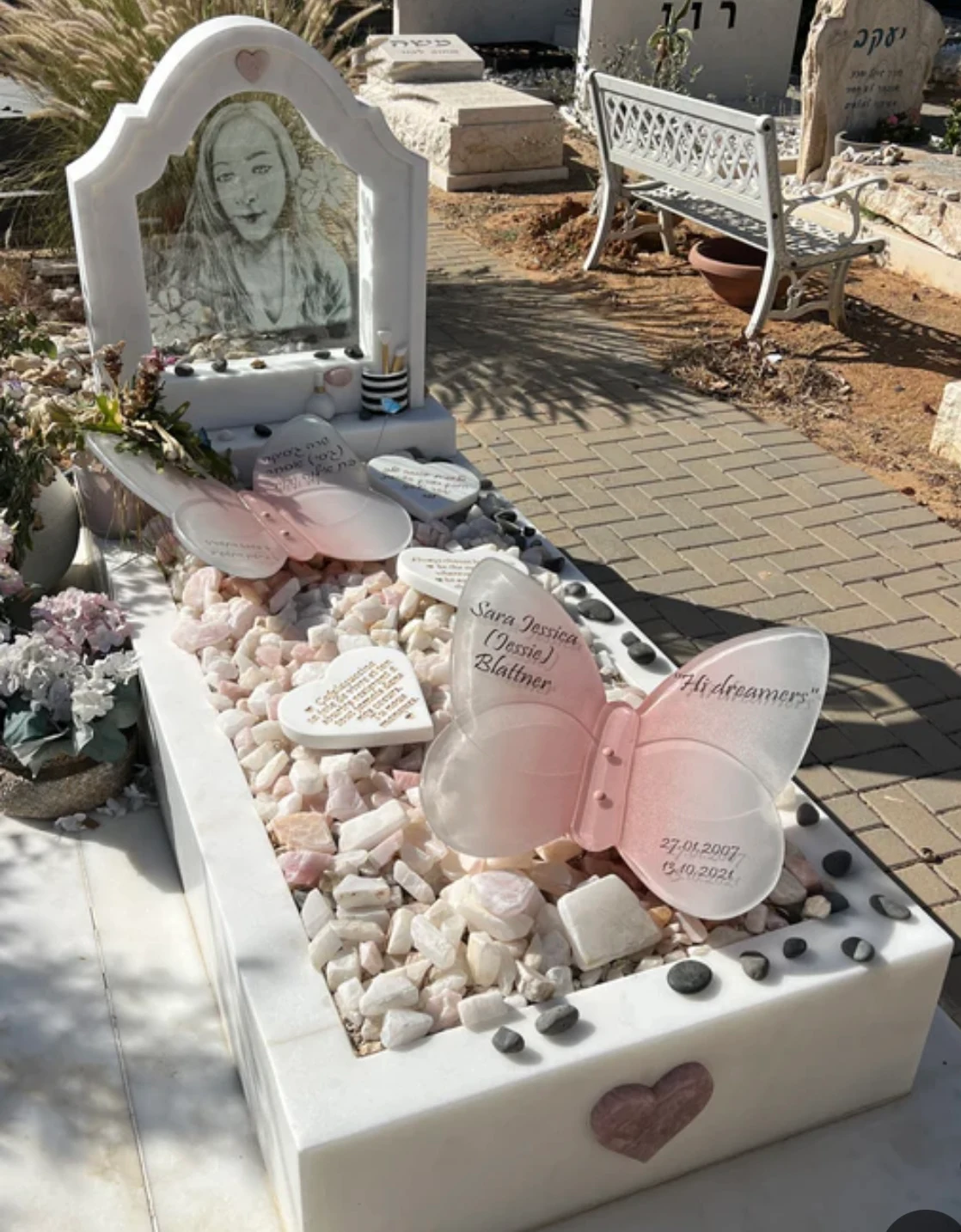
Separate the inscription into factual information—names, dates and family details—and personal wording. You can check spelling and dates while still discussing the personal line. This also lets you revise that line without reopening details already confirmed.
Ask relatives for short ideas first. Whole paragraphs are harder to combine into a clear inscription. One memory—how the person cared for others, or something they often said—may suggest the right line. The wording should sound like your family, not borrowed ceremonial language.
Confirm traditional wording according to your family's custom and appropriate guidance. Do not copy a parent's name, abbreviation or date order from another memorial simply because it looks familiar. Have a fluent reader check any additional language and its writing direction. Seethe inscription guide explains text approval. The guides fora father’s memorial anda mother’s memorial offer original examples to adapt.
Lettering Is Part of the Design
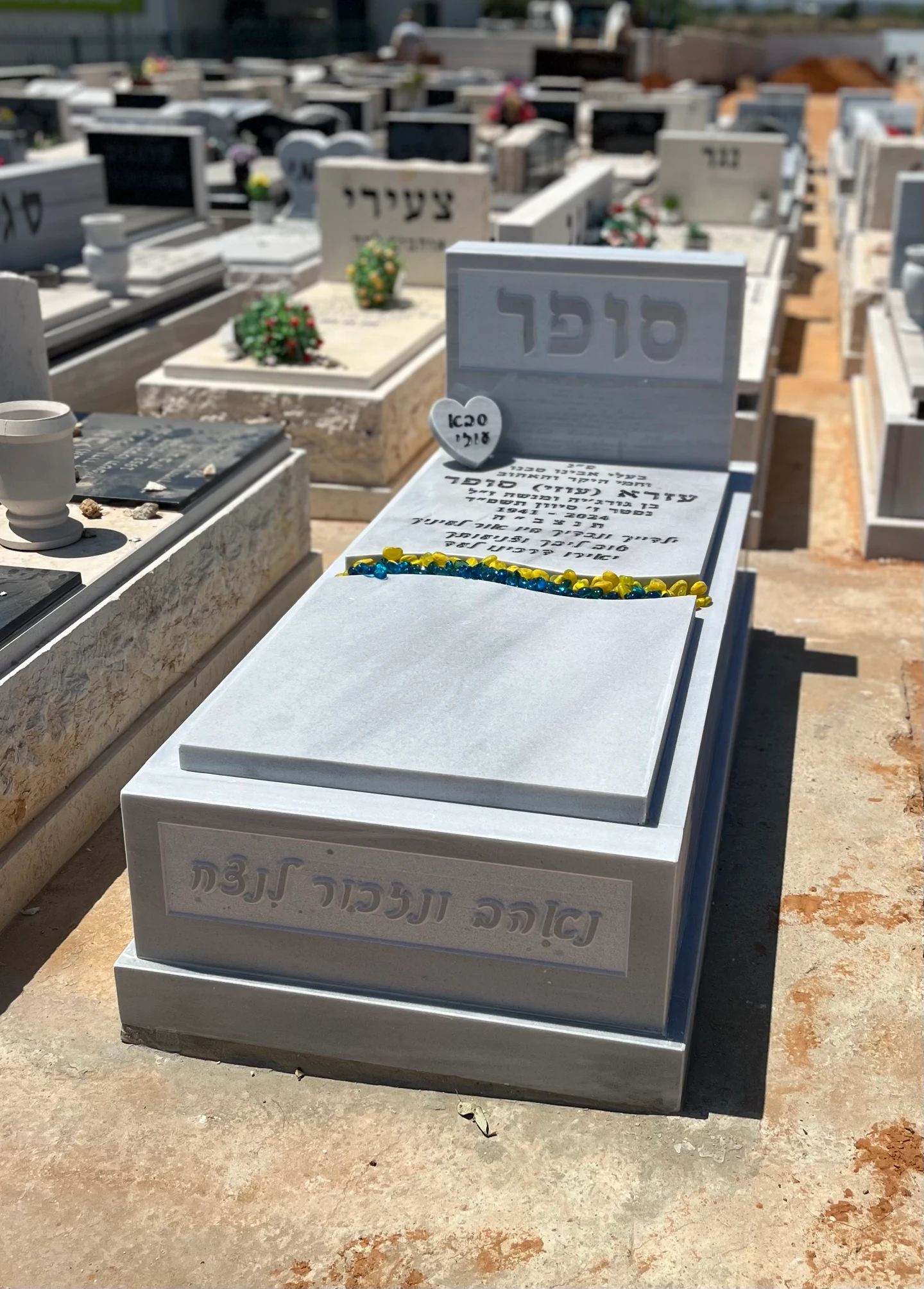
The same words look different as recessed engraving, paint-filled lettering or individually attached letters. The choice affects readability, appearance and care. Ask which technique suits your stone and see an actual example, rather than only a font on a screen. Check the lettering colour against the stone's colour and pattern too.
A layout brings the name, dates, personal line and decoration together. Do not let an extra line automatically make the name smaller. If the text does not fit comfortably, change the arrangement, shorten titles or revise the wording. Shrinking every letter is only one option and is not always the right one.
Read the final text twice: first for its meaning as a visitor would, then letter by letter and date by date. Keep the approved file. If anything changes, ask for a complete revised version rather than relying on a message to “just replace one word.”
Headstone Pricing: Keep the Specification in View
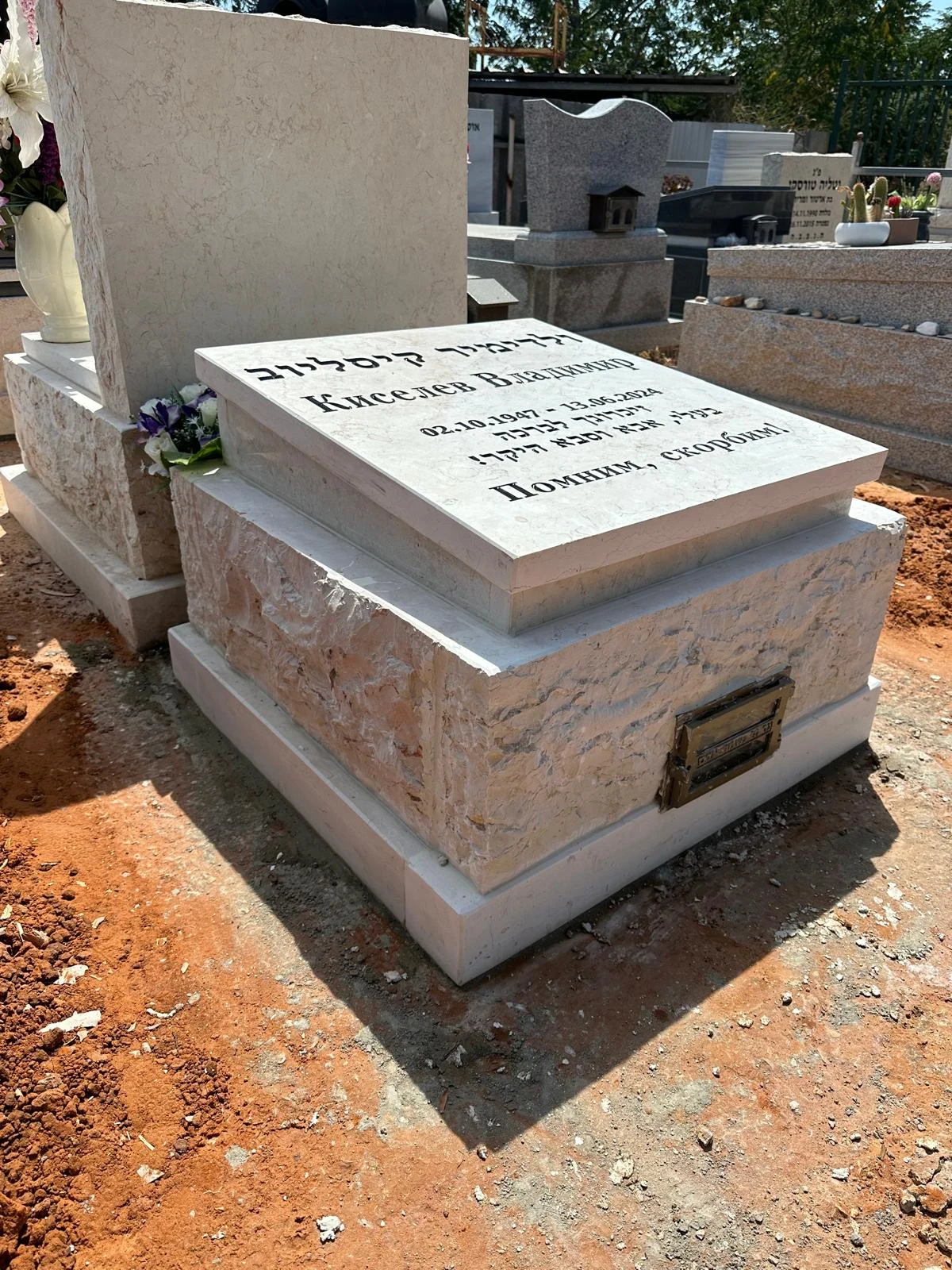
There is no single headstone price. A meaningful quote identifies the material, dimensions, shaping, lettering technique and on-site work. Personal sculpture, mixed materials or use of an existing base can change the scope. Ask not only what it costs, but exactly what that sum includes and what remains outside it.
State a fixed budget early. Identify what must remain and what can change—for example, keeping the upright's shape and a prominent name while simplifying decoration. Ask how each option changes the specification. A lower price is unhelpful if it excludes work you will have to pay for later.
Rubi's approved numerical price list is not currently published on the site. A quote depends on the specific project, not a photograph alone. Seethe headstone pricing guide includes a comparison table for checking like-for-like quotes. Before approval, also clarify VAT, extras, payment terms and conditions for changes or cancellation.
According to the the National Insurance paid-services page — opens in a new window, the standard burial payment does not include the headstone or its foundation. Separate assistance schemes require an eligibility check before ordering; do not assume a private purchase will be reimbursed. Information and source links are collected inthe guide to headstone costs and National Insurance.
A Schedule for Your Particular Project
Mention a desired unveiling date at the first conversation. Timing depends on material selection, dimensions, design approval, wording, production and installation. An approved design in available stone may follow a different schedule from bespoke sculpture or specially ordered components. The actual order must be assessed before promising a completion date.
Record separate dates for inscription approval, completion in the workshop and installation. Ask whether any requested change affects that schedule. A delayed decision on one detail can hold up later stages, even those that seemed settled.
The family need not manage the cemetery's schedule, but should know who coordinates installation and which approvals are in place. Ask to be told of any restriction that changes the plan. Arrange the family gathering around your own needs and customs; the unveiling guide separates ceremony planning from completion of the memorial.
What to Ask before Placing an Order
Find out who makes the headstone, who installs it and who handles your questions. Look at examples similar to your planned work and ask what was done in each. A general photograph may not show close-up lettering, joints or finish. Request additional views of the details that matter to you.
A warranty needs a clear scope, not just an impressive number of years. Ask which work and components it covers, who handles requests and what conditions apply. Also agree how completion will be documented, how to report a concern and where the approved specification will be kept.
Familiarity with a cemetery is not enough. Confirm that the contractor can carry out the work there and that quality, service and terms are clearly agreed. Seethe guide to choosing a memorial mason provides questions you can use without specialist knowledge.
A Final Check before Production
Bring every decision together in one final version. If you have several photographs, drawings and voice messages, ask for a written summary showing which choices are definitive. Do not rely on everyone remembering the latest change in the same way. A clear approval helps both the family and the workshop.
- The location and burial type are confirmed, and the contractor has checked the dimensions.
- The agreement identifies stone, finish and shape, including explained natural variations.
- The full inscription, line breaks and language arrangement have been checked.
- Every addition appears in the drawing and price, or is clearly marked as an unconfirmed option.
- You have the approval date, schedule, payment terms and warranty.
Resolve any uncertainty before approving production. Questions about the name size or candle-holder position are a normal part of design. After cutting or engraving, the same change may require extra work and affect cost and timing. Ask when each choice becomes final.
Installation and Handover: What to Check
Review the memorial after installation, not only as separate workshop components. Request a full view, side views and a clear close-up of the inscription. For relatives living far away, several angles make it possible to check the result without guessing what lies outside the frame.
The family can check names, dates, the approved design, accessory positions and the tidiness of the finished site. Qualified professionals are responsible for stability, fixings and joints. Do not try to move components to test them; photograph anything unusual and contact the installer.
Keep the contact details, order documents and care instructions. Ask which products are suitable for the stone and lettering, and what to do about a stain or loose component. Advice provided at handover helps prevent damage from unsuitable cleaning.
Planning a Shared Headstone or Future Addition
If this memorial will later become part of a family plot, plan lettering space, the arrangement of names and possible additional stone now. Planning ahead does not mean displaying unwanted details in advance; it means preserving an approved structural and design option for the future.
Clarify whether future work means adding a name, fitting a new plaque, replacing a component or allowing access for another burial. These are different jobs. Identical stone trade names do not guarantee a perfect future match: colour and pattern vary, and the existing stone may weather over time.
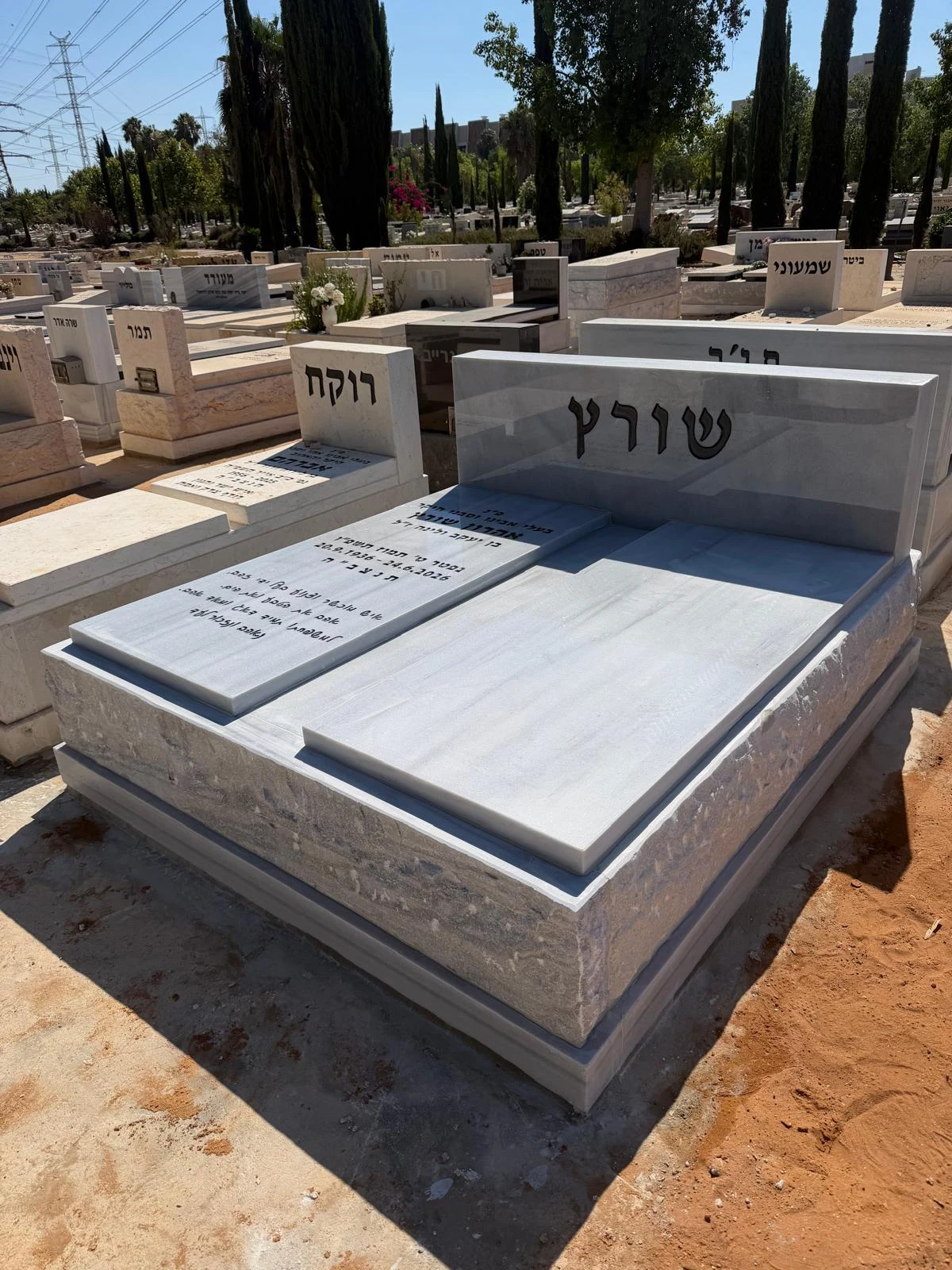
A new memorial beside an existing one can closely match it or share a font, line or detail. Decide which connection matters before trying to copy everything. For a fuller discussion, see double and shared memorials andlayered-burial memorials.
Care Starts with Identifying the Stone and the Problem
Dust, wax, stains, faded lettering and cracks call for different responses. Start with photographs and a note of when the change appeared. Do not use a household product simply because it worked elsewhere. A memorial may combine several materials, and a treatment suitable for stone may damage lettering paint or metal.
Natural Stone Institute — opens in a new window emphasises identifying the stone before choosing a treatment, particularly because calcareous stones are sensitive to acid. The conservation guidance from the US National Park Service — opens in a new window recommends gentle cleaning without wire brushes or pressure washing. These are general principles; care for your memorial should be based on its actual materials and condition.
If you notice movement, flaking, a loose part or damaged lettering, stop any home treatment and request an assessment. Making an old headstone look new at any cost is not the aim; preserving the existing stone and words may be the better approach. In ourthe memorial restoration guide and inthe home care guide explain the scope of work and what to send for assessment.
Questions That Come Up during Planning
Can we choose the memorial before finishing the inscription?
You can begin with the plot, stone and design direction. Estimate the amount of text so adequate space is reserved. A complete approved inscription is required before engraving, by the agreed deadline.
Can we order from a photograph?
A photograph starts a conversation; it is not a production drawing. Separate the features you like from the dimensions, material and rules for your plot. If you want to include an original motif, also check the appropriate permissions and way to use it.
Do we have to visit the workshop?
Start by talking and sharing information, then establish which approvals can be handled remotely. A scheduled visit can help when colour and texture matter. Photographs and physical samples reveal different aspects of a material.
What if family members want different things?
Separate practical decisions, such as dimensions and budget, from personal taste. Agree on two or three essential features and ask for a design around them. One person should coordinate the agreed version and the family's comments.
Can a design be personal without many accessories?
Yes. Proportions, the choice of stone block, precise finishing and the placement of the name are design decisions in their own right. A personal memorial does not need decoration everywhere.
What if we want a change after approval?
Contact the maker promptly and ask how far production has progressed. Do not assume a change is still possible at the same price or by the same date. If it is agreed, request an updated specification and inscription.
Planning a Headstone with Rubi
Rubi Stone Architecture makes headstones and memorials at its workshop at 5 Basel Street, Petah Tikva, serving families throughout Israel. Start with a conversation about the person, the plot and your budget. A finished plan is unnecessary; even one photograph and an open question can begin the discussion.
The work includes stone and design selection, inscription planning and installation coordination according to the order. Payment is on completion, with a warranty of up to ten years depending on the work and the terms of the quote. Record everything important in the same written agreement.
Before speaking with us, gather the cemetery details, one or two reference photographs and your questions. For an overview of the options, visit Headstones: types, materials and comparisons. The initial consultation with Rubi is free and carries no obligation.
Have a question about your headstone?
Ask Rubi about stone, inscriptions and options, free and without obligation.
Related information
Headstones Explained: Types, Stone, Design and Pricing
Explore headstone types, materials, designs, double and double-depth memorials, inscriptions and restoration. Photos and detailed comparisons help you choose for your family.
Read the guide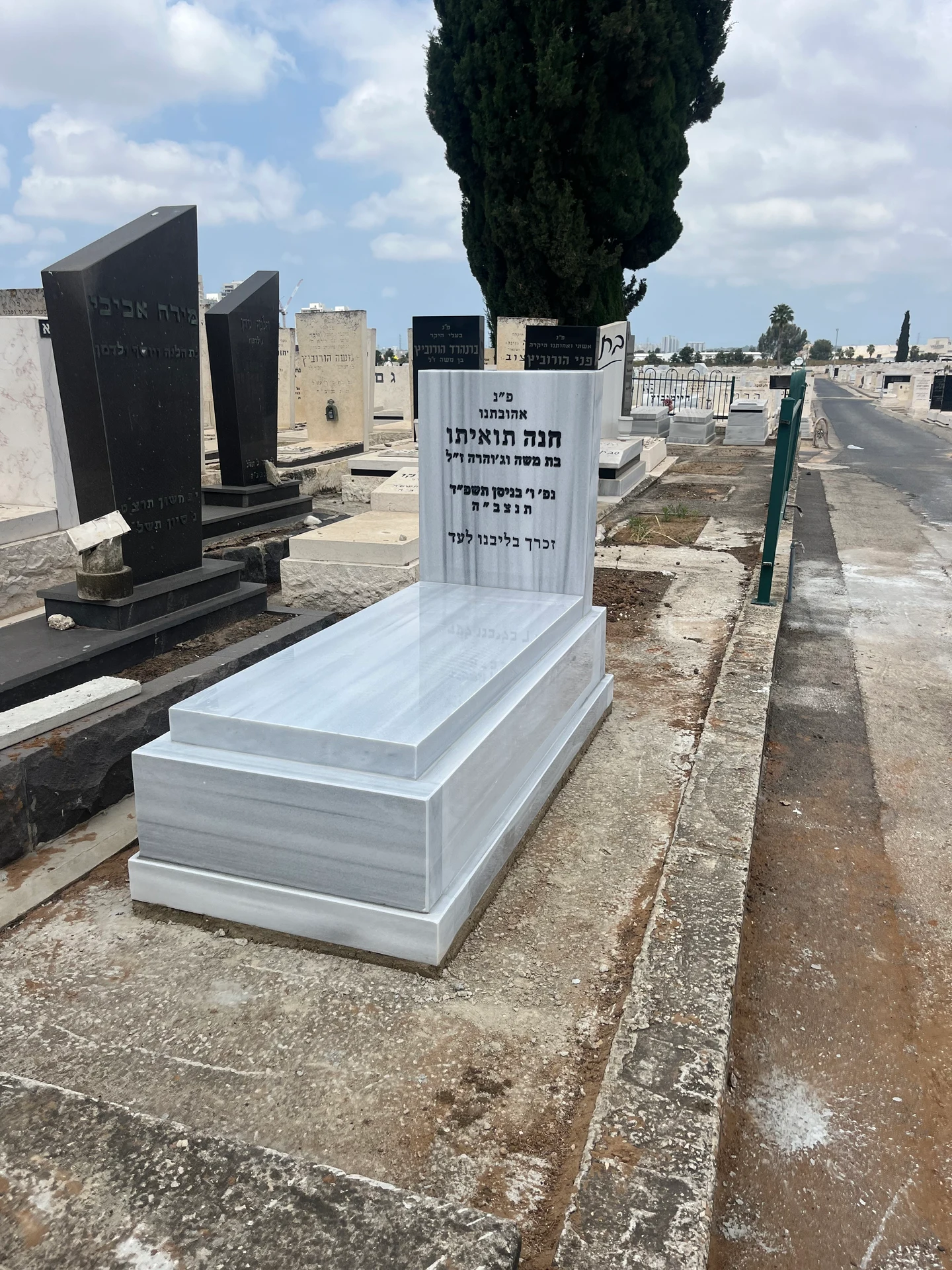
Headstone Prices: What Does a Headstone Cost, and What Is Included?
Headstone prices depend on stone, dimensions, inscriptions and installation. Learn to compare quotes, recognise extras and plan within your budget.
Read the guide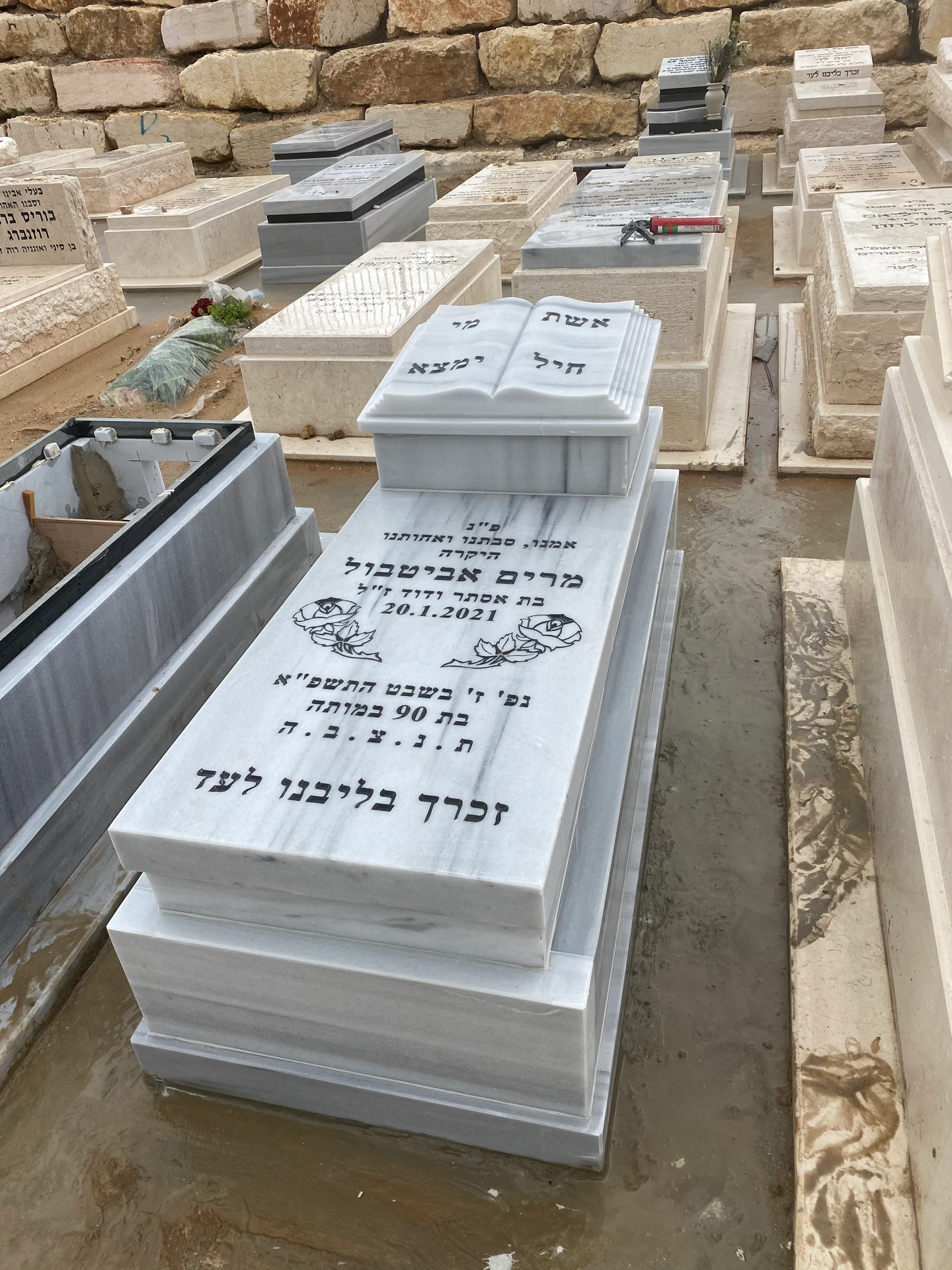
Headstone Inscriptions: Choosing and Approving the Words
What should a headstone say? Wording, names, dates, engraving and line layout, with examples for mothers, fathers and personal tributes.
Read the guide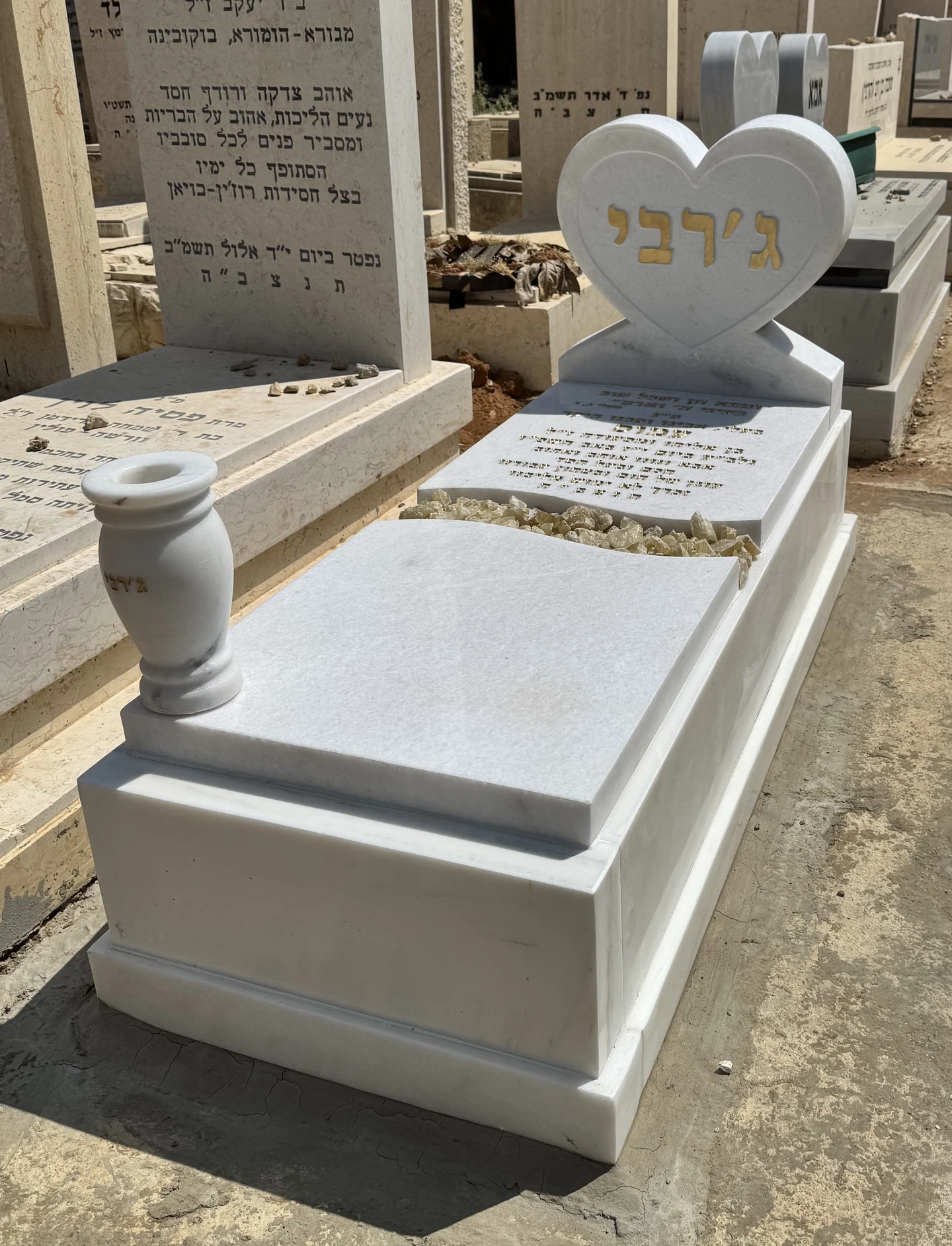
How to Choose a Headstone: A Step-by-Step Guide for Families
Stone, design, budget and installation: what to check before ordering and how to make a clear decision.
Read the guide