Headstone Types: Burial Arrangements, Stone and Design
“Granite”, “double” and “book” are not competing types. One names a material, one a design for two people and one a shape. A headstone can belong to all three.
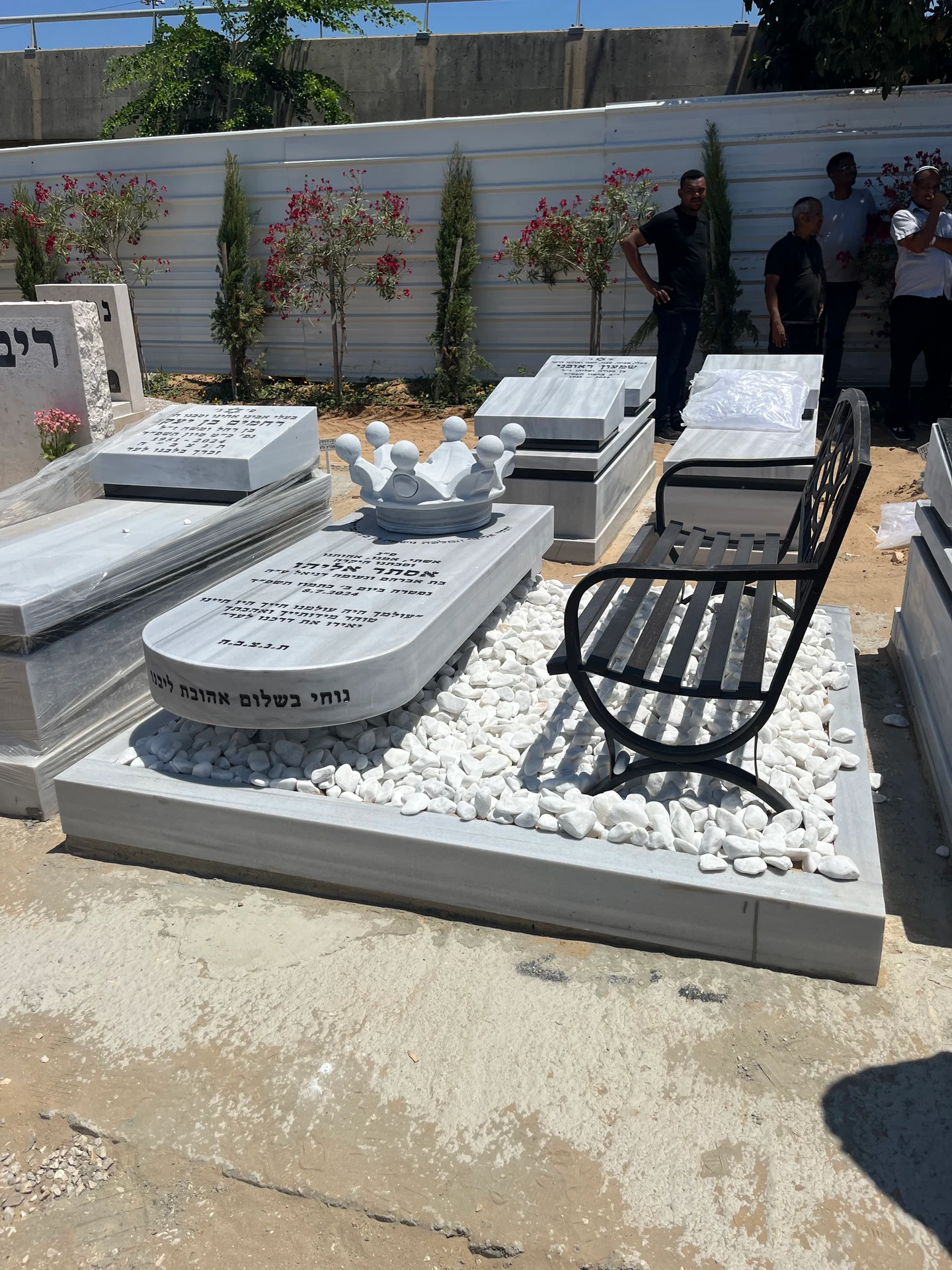
Begin with the Burial Type
| Type | Starting point for design | Further reading |
|---|---|---|
| Single-grave memorial | Plot dimensions and the permitted area for upright and base | Choosing a headstone |
| Double or shared | Two remembrance areas, sometimes on adjacent graves | Double memorial |
| Layered burial (machpela) | Burial levels within one space; assess existing conditions and future work | layered-burial memorials |
| Wall or niche | A plaque sized for the opening and burial system | niche memorials |
Then Choose the Material
Many families start with colour: light, dark or a natural look. Then identify the specific stone, finish and sample intended for the work. Slabs sold under the same trade name can look different.
Granite offers varied colours, light stones can create a quiet impression, and boulders emphasise natural shape and texture. No one material suits every family. Seethe guide to stone types allows comparison of materials without confusing them with burial arrangements.
Next, Consider the Design
Clean lines
A clear upright and base, few components, and emphasis on the name and stone.
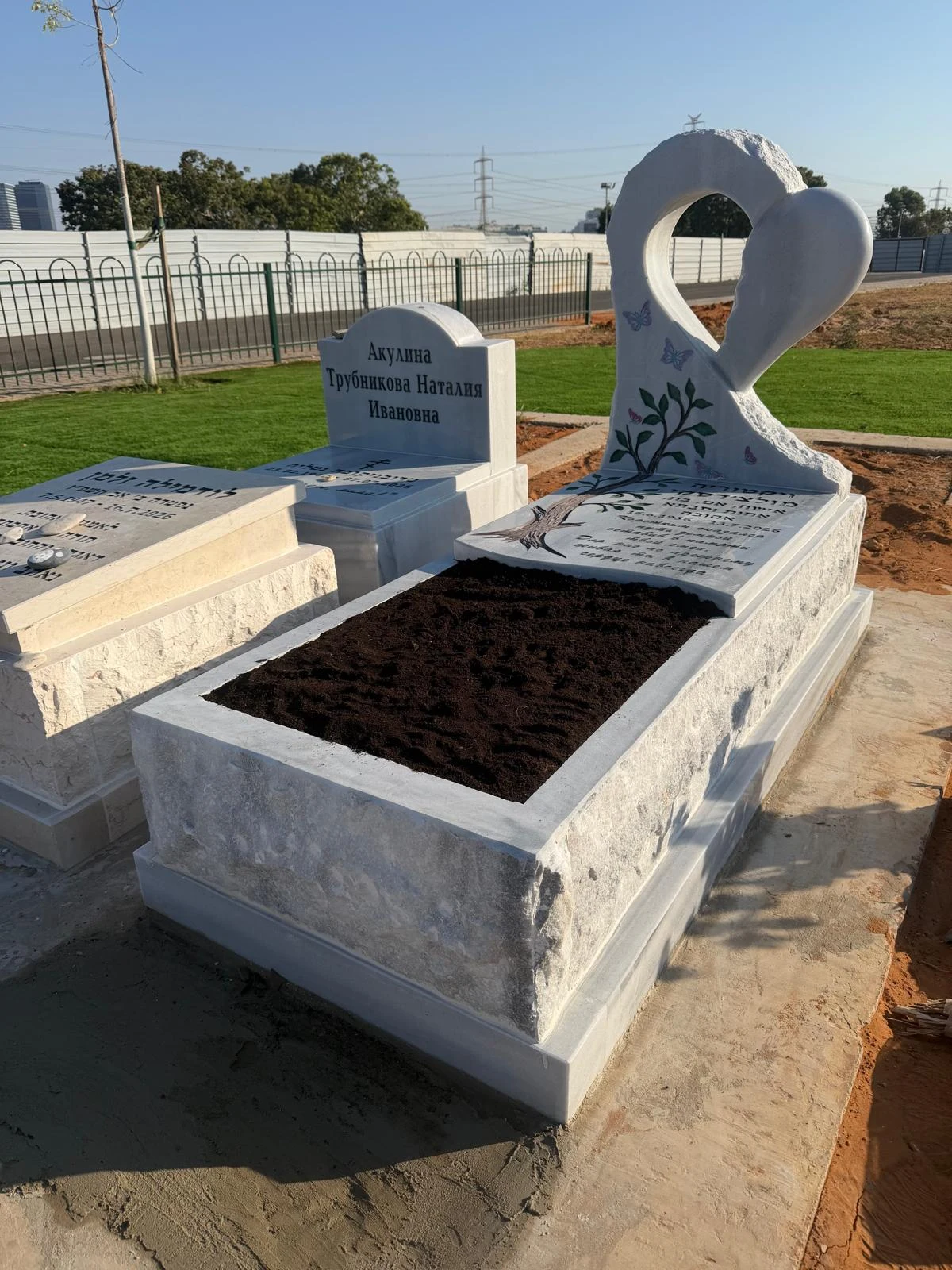
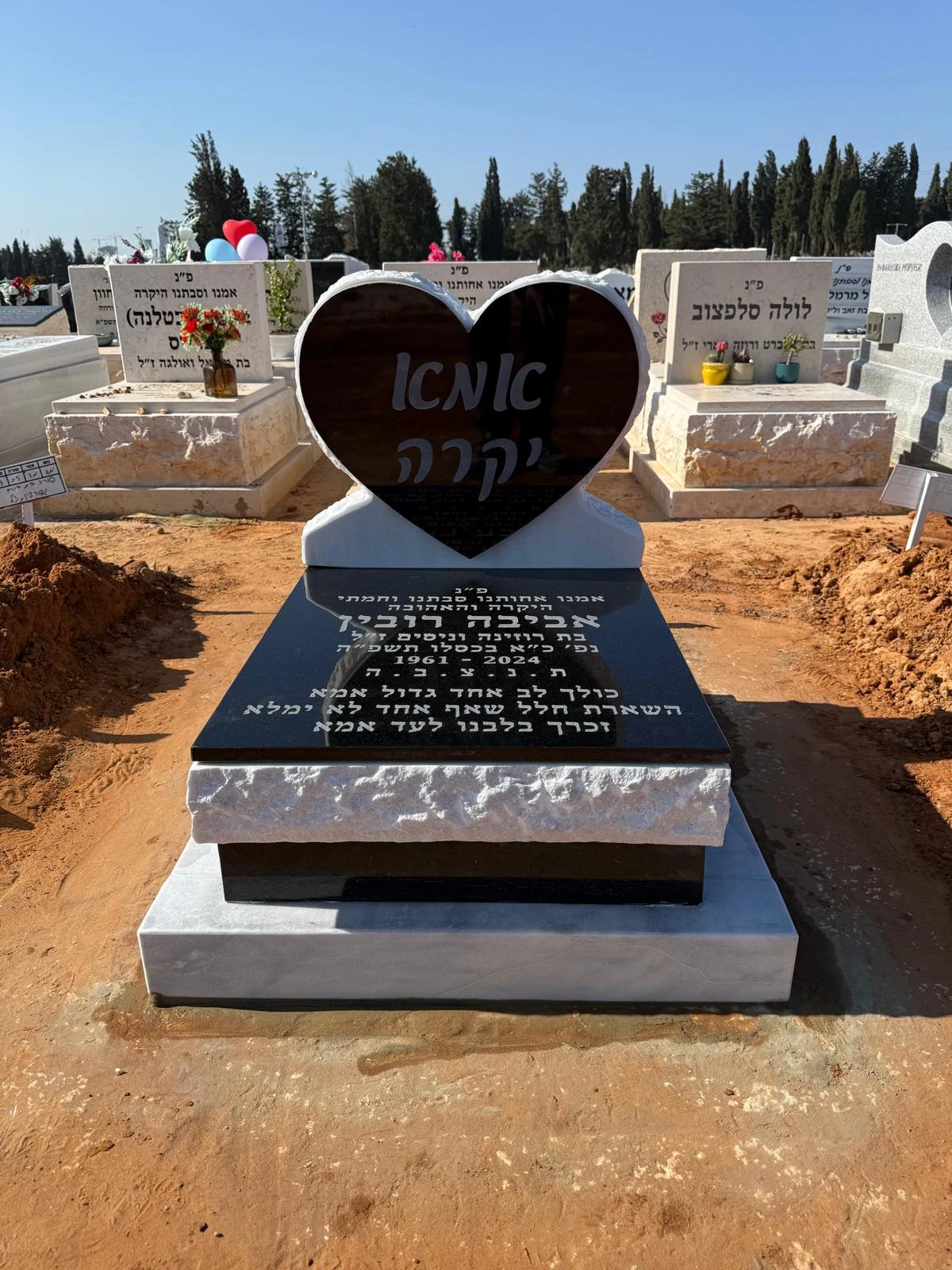
Sculpted shape
A book, heart or personal motif, with material thickness, proportions and lettering suited to its shape.
Natural appearance
Preserve part of the boulder’s original shape and define the inscription surface.
Two Examples to Clarify the Terms
“A double granite memorial with two separate plaques” states structure, material and layout. “A single-grave boulder memorial with a worked inscription surface” does the same. Such descriptions make relevant photos and like-for-like quotes easier to obtain.
“A special memorial” remains very broad. Add what matters: a natural appearance, two names, longer wording or sculpture. You can keep the material choice flexible until dimensions and budget are clearer.
What to Have Ready for the First Conversation
- Cemetery name and the burial type you were given.
- Whether this is new work or must relate to an existing memorial.
- A preferred material, colour or reference photograph.
- Whether future lettering space is needed.
- Preferred date and budget, even if only provisional ranges.
Can You Change Direction during Planning?
Yes, provided the production stage and existing approvals are clear. Changing stone before ordering differs from changing it after cutting. Ask when decisions become final and how changes are priced.
The catalogue is organised by both material and design. If a headstone you like appears in another category, send it to Rubi and discuss which elements can suit your plot.
Have a question about your headstone?
Ask Rubi about stone, inscriptions and options, free and without obligation.
Related information
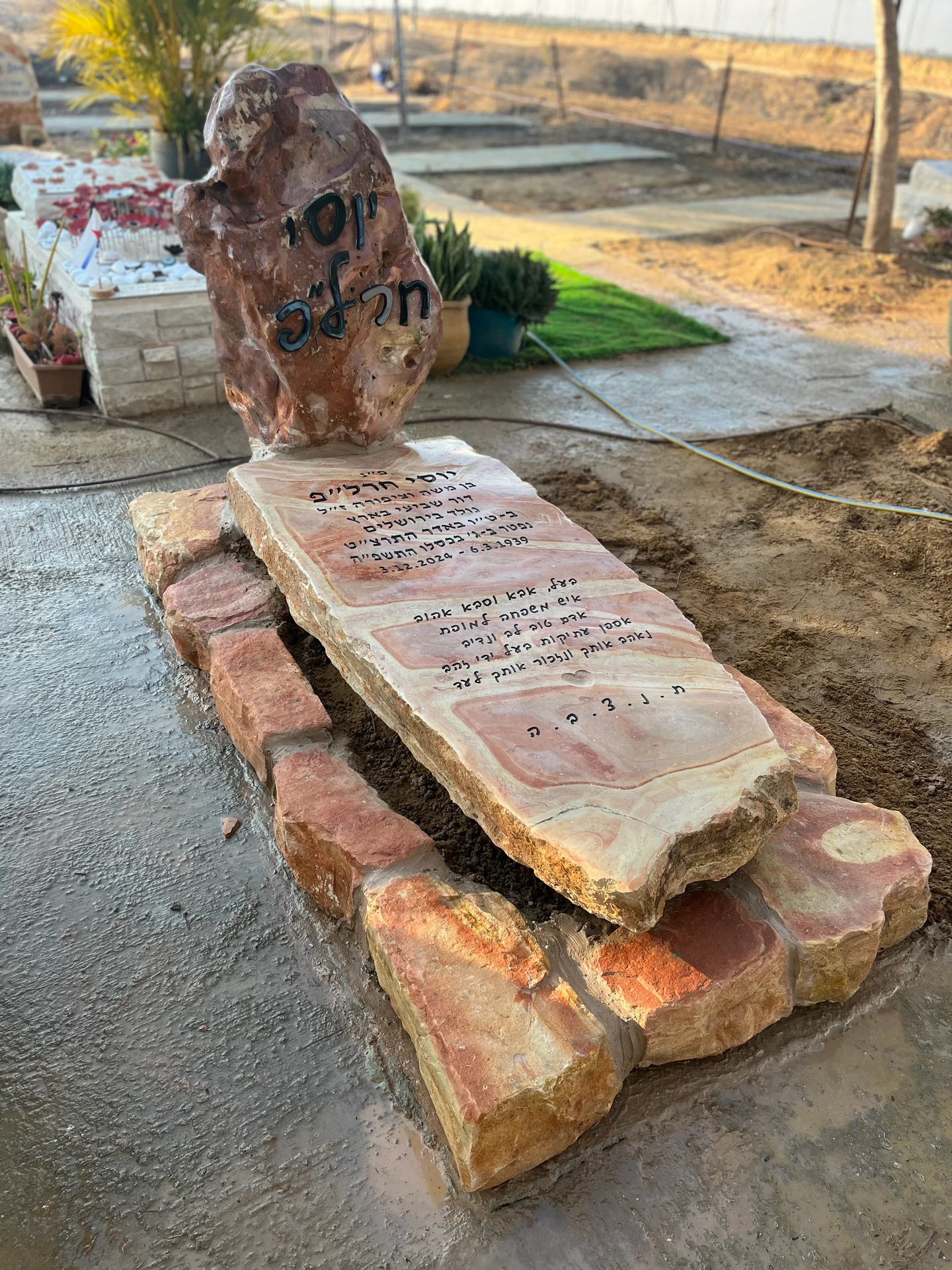
Stone for Headstones: What to Look for Before You Choose
Granite, Hebron limestone, Turkish marble, Thassos and natural boulders: a guide to material, finish and inscription choices.
Read the guide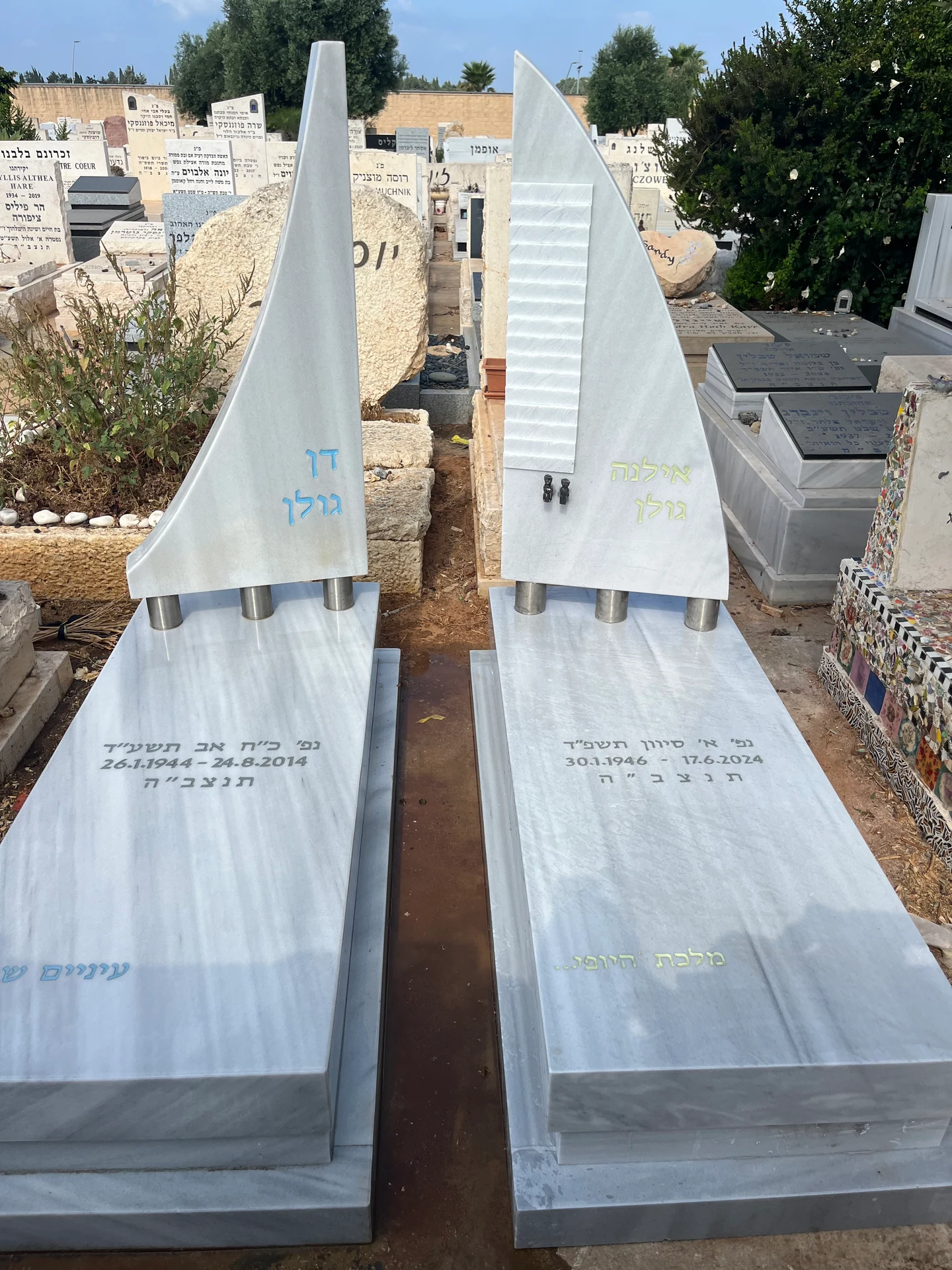
A Double Headstone: Planning for Two Names and a Shared Memory
Double headstones: shared and separate designs, future inscriptions, matching stone and the difference between adjacent graves and double-depth burial.
Read the guide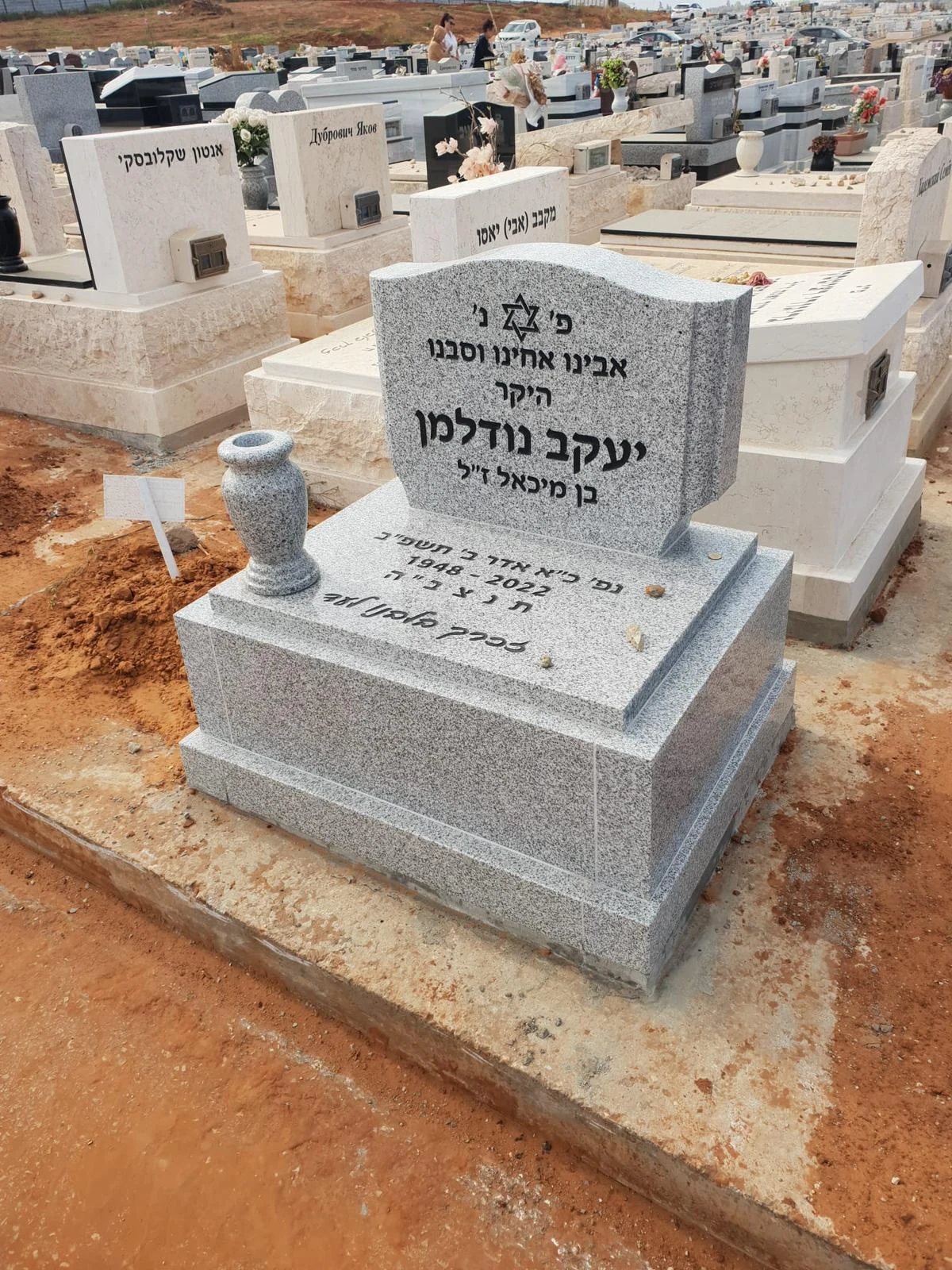 Image awaiting review
Wall Burials: Choosing a Memorial Plaque for a Burial Niche
Burial-niche plaques: measuring the opening, arranging names and dates, inscriptions and installation. What to obtain from the cemetery before ordering.
Read the guide